
Sunrise on Lion Mountain
The lion faces the sea, and the sea is where the sun comes up. A dawn start on Lion Mountain puts the bay of Grand Port, Île aux Aigrettes and the reef in front of you as the light arrives, with the whole climb done in the coolest hour of the day. It also means walking unmarked cane roads and a steep forest path by headlamp. Here is how to time it month by month, what the dark start really involves and why an evening visit is the less forgiving alternative.
Read the guide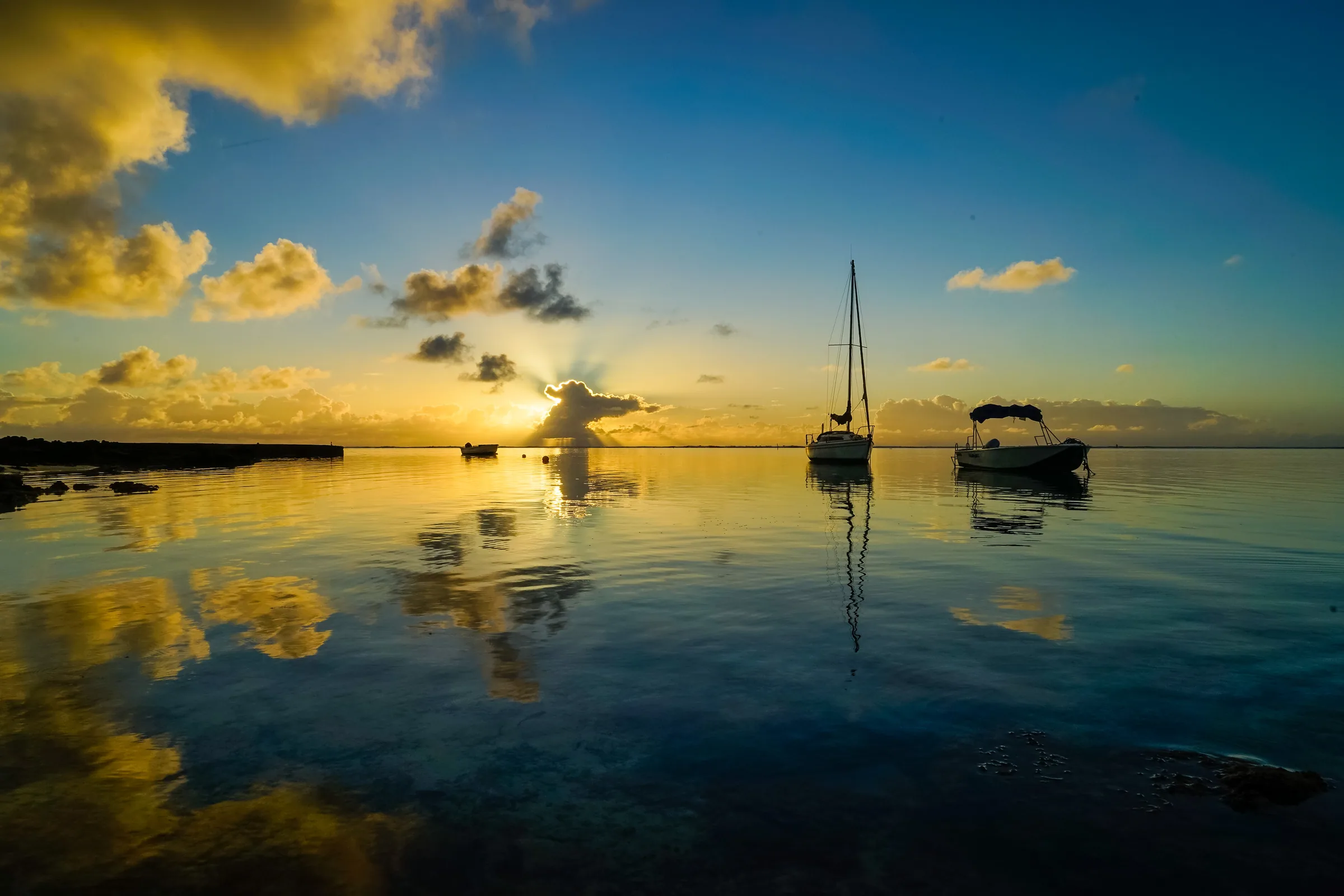
Sunrise and sunset by month
Mauritius sits at about 20 degrees south, so day length swings by about two and a half hours across the year and sunrise moves between roughly 05:20 and 06:45. There is no daylight saving and the island keeps UTC+4 all year, so the times below hold from one year to the next within a minute or two. They are published for Port Louis; Mahébourg and Vieux Grand Port, on the eastern side of the island, see the sun about a minute earlier.
| Month | Sunrise | Sunset | Day length |
|---|---|---|---|
| January | 05:42 | 18:55 | 13 h 13 min |
| February | 06:01 | 18:46 | 12 h 45 min |
| March | 06:12 | 18:25 | 12 h 13 min |
| April | 06:20 | 17:59 | 11 h 38 min |
| May | 06:31 | 17:41 | 11 h 10 min |
| June | 06:42 | 17:38 | 10 h 55 min |
| July | 06:45 | 17:46 | 11 h 01 min |
| August | 06:31 | 17:57 | 11 h 25 min |
| September | 06:06 | 18:04 | 11 h 59 min |
| October | 05:39 | 18:12 | 12 h 33 min |
| November | 05:22 | 18:26 | 13 h 04 min |
| December | 05:24 | 18:45 | 13 h 21 min |
Working out when to leave the village
Most people take three to four hours for the whole round trip by day, and the climb in the dark is slower than the climb in daylight. Allow about two hours from the police station to the ridge junction below the head if you are moving carefully with a headlamp, and another 20 to 30 minutes from there onto the head itself. So to be on the ridge as the sky lightens, leave the village about two hours before the sunrise time for the month. In June or July that means walking out of Vieux Grand Port at around 04:45. In November, with sunrise at 05:22, it means leaving at about 03:20, which is a real test of enthusiasm.
Aim for the ridge junction at first light rather than for the summit at the exact minute of sunrise. Dawn near the tropics is quick, about 20 minutes from the first grey in the east to the sun on the horizon, and the ridge faces the right way. That leaves you the final slabs onto the head in usable light, which is how they should be done, and you still see the sun come up over the water. Arriving on the head ten minutes after sunrise loses almost nothing. Arriving on it ten minutes before, in the dark, on exposed rock, gains nothing worth the risk.
What a dark start involves
The two problems of a dark start on Lion Mountain are the cane and the rock. The cane roads at the bottom are unmarked by day and far worse by night, when every junction looks the same and the mountain that guided you in daylight is a black shape against a slightly less black sky. The forest climb is steep, rooty and stepped, which is tiring but manageable with a good lamp. The head is exposed and should not be attempted in darkness at all. In between, the ridge is open and easy to follow.
- Carry a proper headlamp with fresh batteries and a spare, not a phone torch. You need both hands on the forest climb.
- Load the GPX track the day before and test that it displays offline. The cane is where you will need it.
- Walk the route once by day before trying it at dawn, if you possibly can. Junctions you have seen are junctions you recognise.
- Do not go alone. Guides who know the mountain say the same, and in the dark a second person is also a second lamp and a second phone.
- Expect mosquitoes in the lower forest at dawn. Repellent is mentioned in almost every recorded review.
- Tell someone your plan and your turnaround time, and leave nothing on view in the car. The village will be asleep when you park.
Where the sun rises over the bay
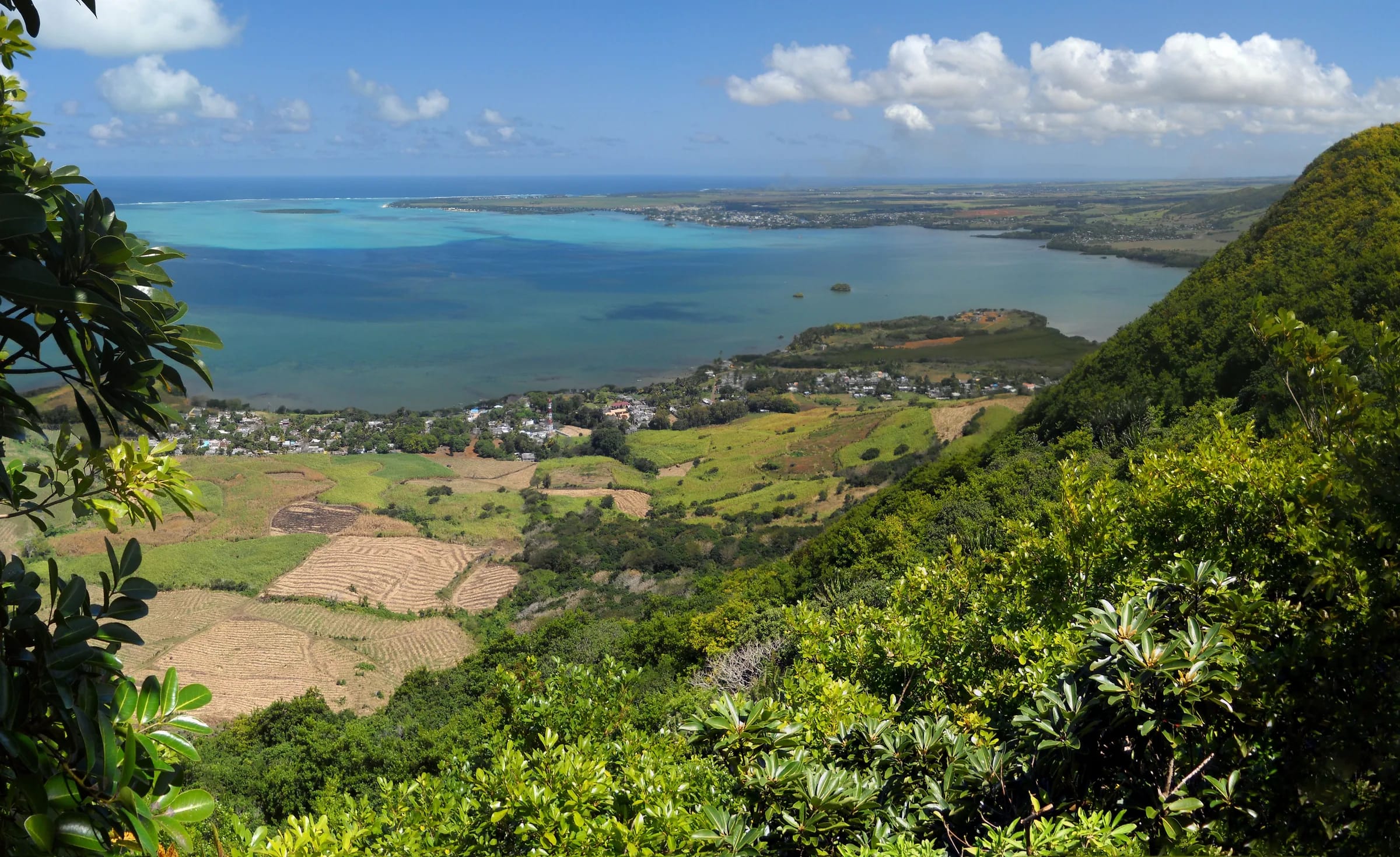
From the ridge and the head you look east and south-east over the bay of Grand Port, across the lagoon to the reef and the open ocean beyond it. That is where the sun rises, over the water, with nothing in the way. Around June it comes up a little north of due east, around December a little south of it, and in both cases it clears the horizon over the sea rather than over land. Mahébourg, Île aux Aigrettes and the airport lie to the south-west and take the first light on their faces while the water in front of you turns from grey to silver.
The summit itself is partly screened by trees, according to a recent reviewer, and the better dawn platform is the Eastern Viewpoint on the eastern ridge, the one with the Mauritian flag on the rocks, which Komoot users rate as the finest outlook on the mountain. If the loop is in your plan, this is the strongest argument for climbing the eastern ridge first in the morning and coming down the spine. Seen from Mahébourg at the same moment, the lion is a silhouette with the sun behind it, which is worth knowing if someone in your party would rather photograph the mountain than climb it.
Conditions on the summit right now
A clear dawn is never guaranteed on this side of the island. The south-east trade winds reach this coast first, fog and rain can sit on the summit while the coast is clear, and the wind is strongest in July and August, which are also the months with the latest sunrise. The panel below shows current conditions on the ridge. Check it the evening before and again when you wake, and if the summit is in cloud, consider the Eastern Viewpoint or a later start rather than a dark climb to a view you will not see.
Today on Lion Mountain
Reading the forecast for the summit…
Nobody sells a sunrise departure here
Unlike some better-known peaks, Lion Mountain has no commercial sunrise hike. The guided outings that meet in Vieux Grand Port start at 07:00 or 08:30, which puts you on the ridge in good morning light but well after the sun is up. No operator was found offering a pre-dawn departure for this mountain, so a sunrise ascent is something you organise yourself or arrange privately with a guide who is willing to start in the dark.
The one organised crossing of Lion Mountain at first light is a race. The CIEL Ferney Trail, run each September from the Vallée de Ferney, has sent its longer courses over the mountain at sunrise in past editions, including a 50.1 km course in 2018 and a 38.3 km course in 2019, and the current event offers distances from 5 km to 35 km. If you want company on the ridge at dawn, that is the one morning of the year you will find it. Our trail running page has the details.
The evening alternative and the short dusk
Sunset on Lion Mountain is a quieter proposition than sunrise, because the sun goes down inland behind the Bambous range and you are looking the other way. What you get instead is the bay, the reef and Île aux Aigrettes taking the last warm light while the mountain’s own shadow stretches out across the cane towards the sea. Sunset falls between about 17:38 in June and 18:55 in January, and the whole coast turns gold for the last half hour before it.
The problem is what comes next. Dusk this close to the equator lasts about 20 minutes, and then it is dark. The descent from the head to the village takes most people an hour to an hour and a half, over the same slabs, steps and roots you climbed, followed by the unmarked cane roads. Almost all of that would be done by headlamp. If you want the evening light, be off the head by sunset at the latest and better still at the ridge junction, carry the lamp you would carry for a dawn start, and remember that the Ferney car park, if you began there, locks at 16:00.
Questions people ask
What time is sunrise on Lion Mountain?
Between about 05:22 in November and 06:45 in July, local time, with Mahébourg and Vieux Grand Port seeing the sun a minute or so before Port Louis. Mauritius keeps UTC+4 all year with no daylight saving, so the monthly table on this page holds from year to year within a minute or two.
Is there a sunrise tour of Lion Mountain?
No commercial sunrise departure was found for this mountain. Guided outings meet in Vieux Grand Port at 07:00 or 08:30. A sunrise climb is something you organise yourself or arrange privately with a guide prepared to start in the dark. The Ferney Trail race has crossed the mountain at first light in past editions, once a year in September.
Is it safe to climb Lion Mountain in the dark?
The cane roads and the forest climb can be done by headlamp if you know the route, carry a GPX track and do not go alone. The exposed slabs onto the lion’s head should not be climbed in darkness. Plan to be on the ridge junction at first light and climb the head once you can see without the lamp.
Which direction does the sun rise from the summit?
To the east and south-east, over the lagoon, the reef and the open ocean beyond the bay of Grand Port. In the southern winter it rises a little north of east, in summer a little south of east, and in every month it clears the horizon over water. Mahébourg and Île aux Aigrettes to the south-west catch the first light.
Can I do Lion Mountain at sunset instead?
You can, but it is less forgiving than sunrise. The sun sets inland behind the Bambous range, the bay takes the last warm light, and then dusk lasts about 20 minutes before full dark. The descent takes an hour or more over exposed rock and unmarked cane, so be off the head by sunset and carry a headlamp.
What should I bring for a dawn start?
A proper headlamp with spare batteries, a charged phone with the GPX track loaded for offline use, at least 1.5 litres of water for the climb and the hot descent, mosquito repellent for the lower forest, shoes with real grip for wet dawn rock and a warm layer for the wind on the ridge in the cooler months.
Check the weather first
Trade winds, rain on the south-east coast and the months that give the clearest dawns, with the live summit panel.