
Blue Bay Marine Park
Blue Bay is the lagoon and public beach just south of Mahébourg, and the obvious place to swim after the climb. The water has been a national park since 1997 and a marine park since 2000, the beach is free and popular with Mauritian families, and glass-bottom boats and snorkelling trips leave from the sand. It is also under the airport flight path and catches the winter wind, which this page explains honestly.
Read the guide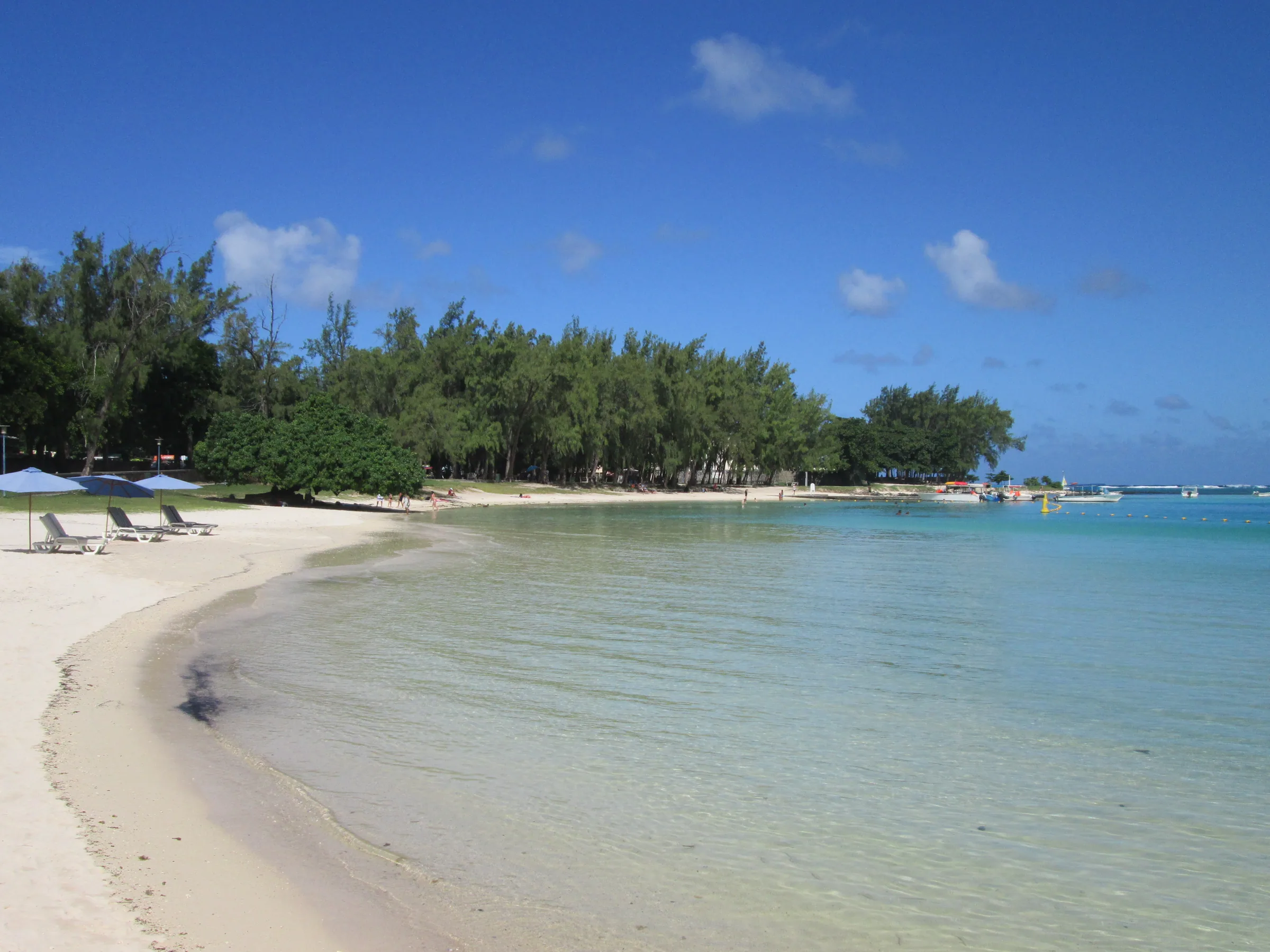
A protected lagoon beside the airport
Blue Bay sits at the southern end of the bay of Grand Port, past Mahébourg and Pointe d’Esny, about ten minutes from the airport. It is the resort area closest to the runway, and the public beach is the one Mauritians from the south-east use at the weekend. The name describes the water. The lagoon is shallow, which most accounts put at one to five metres, and it is sheltered by the reef, so the colour is the first thing you notice from the sand.
The protection came in stages. The 353 ha of lagoon were declared a national park in October 1997, redesignated a marine park in June 2000 and listed as a wetland of international importance under the Ramsar Convention on 31 January 2008. In practice that means the lagoon is managed as a reserve rather than a free-for-all, while the beach remains fully public and free.
What lives on the reef
The Ramsar information sheet for the site records 38 species of coral in 28 genera and 15 families, and about 72 species of fish. Some blogs claim more than 50 coral species; this guide prefers the Ramsar figure, which comes from the designation documents. The endangered green turtle uses the park, and seeing one is a matter of luck rather than a promise.
The reef patches the boats visit lie out in the lagoon rather than at the water’s edge, so a short boat trip shows far more than paddling off the beach. Snorkelling straight from the sand is pleasant in calm weather, but if you have come for the coral, take the boat.
Glass-bottom boats and snorkelling
Glass-bottom boats work from the beach and trips typically last 45 to 60 minutes, drifting over the coral patches with the option of getting into the water with a mask. Boats also offer trips to Île des Deux Cocos, the islet off the point. Boatmen work from the beach and you agree the trip before you board. Prices are not quoted here because they change with the season, the group size and the length of the trip.
If you would rather have the trip arranged in advance, snorkelling in the Grand Port lagoon and a catamaran day from Mahébourg are both bookable through Andeor. The links are in the sources at the end of this page. Whichever way you go out, the rules of the park are the same, and they are simple.
- Do not touch or stand on coral, and keep fins away from it.
- Do not feed fish or chase turtles.
- Wear a long-sleeved top in the water rather than relying on sunscreen alone.
- Follow the boatman’s instructions about where to swim, since the lagoon has boat traffic.
- Take your rubbish away with you.
The swim after the hike
The classic south-east day is a dawn start up the lion, a late breakfast in Mahébourg and the early afternoon in the water at Blue Bay. The timing works. Most hikers are back in Vieux Grand Port within three to four hours of starting, the drive around the bay to Blue Bay is short, and the beach has public access with no entry fee.
Two warnings. The beach fills up on Sundays and public holidays with local families, which is part of its character but means it is busy. And after a steep climb in the sun you are dehydrated and probably sunburnt, so drink before you swim and cover up on the beach rather than adding an afternoon of sun to the morning’s.
If you have energy left, a glass-bottom boat is the right length of outing for tired legs. If you do not, the lagoon is shallow and calm inside the reef and sitting in it is a perfectly good plan.
Wind, aircraft and the time of year
Blue Bay and Pointe d’Esny lie under the approach path to the airport, so aircraft pass low overhead at intervals through the day. The bigger factor is the wind. The south-east trade wind blows onto this coast for much of the year and is strongest in July and August, and both Blue Bay and Pointe d’Esny are described as windier, especially in winter. On a windy winter afternoon the lagoon is choppy and the beach less inviting; on a still summer morning it is glass.
Rain is less of a problem than on the hills. The airport weather station at Plaisance, a few kilometres away, records about 1,660 mm a year, with the driest months from June to October and the wettest from January to March. Summer brings heat, humidity and the cyclone season, roughly November to April with the official warning window running to mid May.
| Months | Rainfall per month | What it means at the beach |
|---|---|---|
| January to March | 237 to 258 mm | Hot and humid, showers, cyclone season |
| April to May | 142 to 197 mm | Warm and settling |
| June to August | 72 to 95 mm | Dry, windy, cooler air and water |
| September to October | 49 to 66 mm | Driest months, often the best beach weather |
| November to December | 84 to 122 mm | Warming up, rain returning |
Pointe d’Esny next door
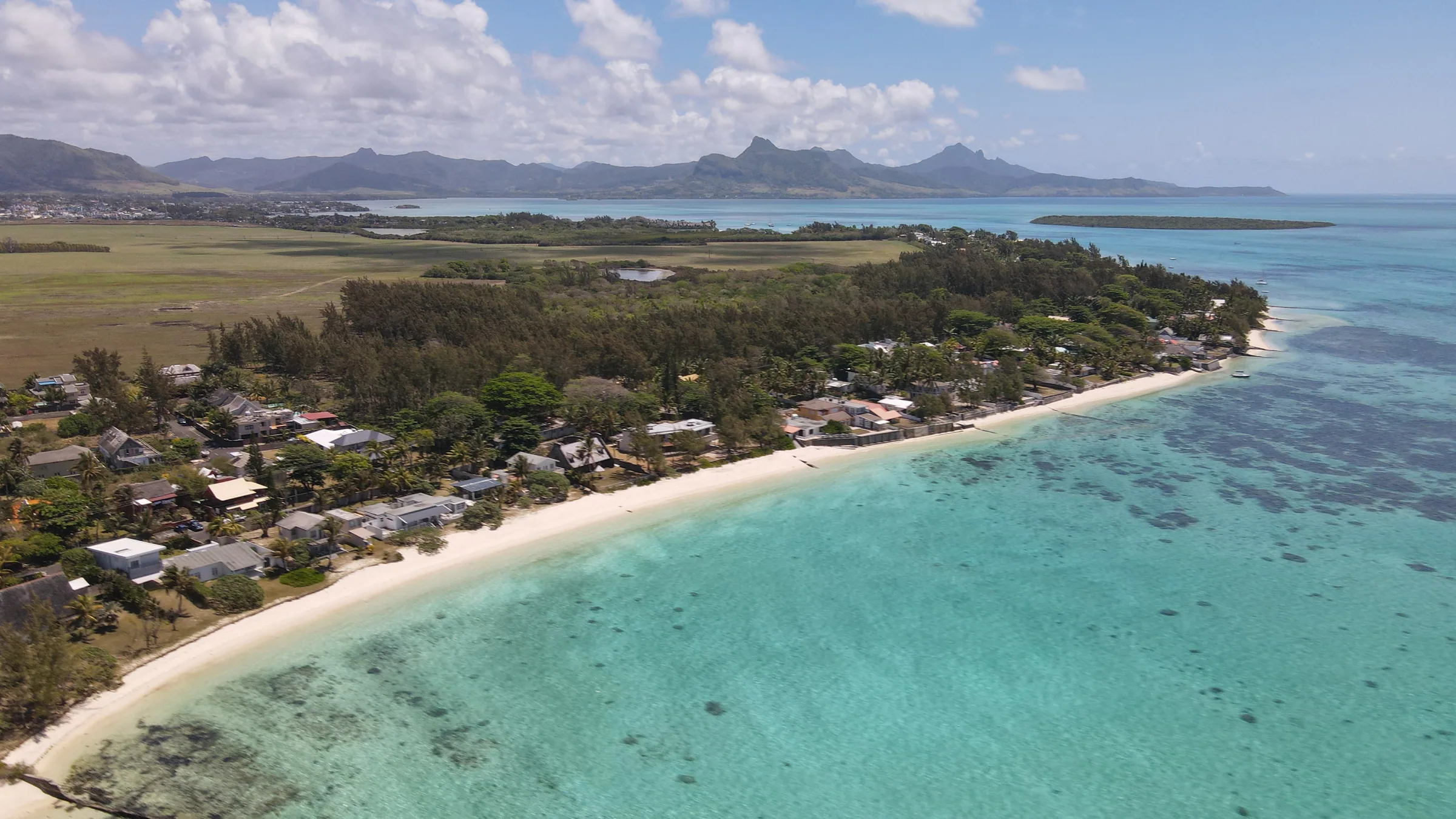
Pointe d’Esny is the stretch of coast between Mahébourg and Blue Bay, about a ten-minute walk from the Blue Bay beach. It is quieter, with villas and guesthouses rather than a public beach scene, and it shares the wind and the flight path. If you want to sleep near the water and be close to both the hike and the swim, the where to stay guide weighs Blue Bay, Pointe d’Esny and Mahébourg against each other.
Along the same coast, at Pointe Jérôme beside the Preskil resort, is the old sand jetty where the boats leave for Île aux Aigrettes, which is the other obvious afternoon after the mountain and the subject of its own page.
Practical notes
A few things that save time and bother.
- The beach is public and free. There is no ticket for the marine park if you stay on the sand or swim from it.
- Blue Bay is about ten minutes by car from the airport, which makes it a good last swim before an evening flight.
- Weekends and public holidays are busy with local families; weekday mornings are quiet.
- Bring water, a hat and something to cover your shoulders.
- Respect the park. No touching coral, no collecting shells, no feeding fish.
- Boatmen on the beach offer glass-bottom trips of 45 to 60 minutes; agree the price before you go.
Questions people ask
Is Blue Bay beach free?
Yes. The beach is public and there is no entry fee for using it or for swimming and snorkelling from the sand. The marine park protection applies to how you behave in the water, not to access. You pay only if you take a glass-bottom boat or an organised snorkelling trip, and those prices are agreed with the boatman or booked in advance.
Is Blue Bay good for snorkelling?
Yes, with a caveat. The Ramsar sheet records 38 coral species and about 72 fish species in the park, and the lagoon is shallow and sheltered. The richest coral lies out in the lagoon where the glass-bottom boats go, so snorkelling straight off the beach is pleasant but modest. A 45 to 60 minute boat trip with a mask shows you far more.
Can you see turtles at Blue Bay?
Sometimes. The endangered green turtle is recorded in the marine park and is one of the reasons for its Ramsar listing, but sightings are never guaranteed and no honest guide should promise one. Go out with a boat, keep still in the water, and if a turtle appears, watch it from a distance without chasing it.
How far is Blue Bay from the airport?
About ten minutes by car. Blue Bay is the resort area closest to the runway, which is why aircraft pass overhead on approach. It makes a good first stop after landing or a last swim before an evening flight, and Mahébourg, about 6 km from the airport, is just up the coast.
Can I hike Lion Mountain and swim at Blue Bay on the same day?
Yes, and it is the classic south-east day. Start the climb at first light, allow three to four hours for the return trip from Vieux Grand Port, eat in Mahébourg, and be in the water at Blue Bay by early afternoon. Drink plenty before you swim and cover up on the beach; the climb has already given you a morning of sun.
Is Blue Bay windy?
Often, especially in winter. The south-east trade wind blows onto this coast for much of the year and is strongest in July and August, and both Blue Bay and Pointe d’Esny are described as windier than other resort areas. Mornings are usually calmer than afternoons. The lagoon stays sheltered by the reef, so the wind matters more for comfort on the sand than for safety in the water.
When did Blue Bay become a marine park?
The 353 ha lagoon was declared a national park in October 1997, redesignated a marine park in June 2000 and listed as a Ramsar wetland of international importance on 31 January 2008. The Ramsar information sheet records 38 coral species, about 72 fish species and the endangered green turtle.
Plan the hike and the swim
The day plan puts the dawn climb, breakfast in Mahébourg and the afternoon at Blue Bay in the right order.