
Nature and wildlife on Lion Mountain
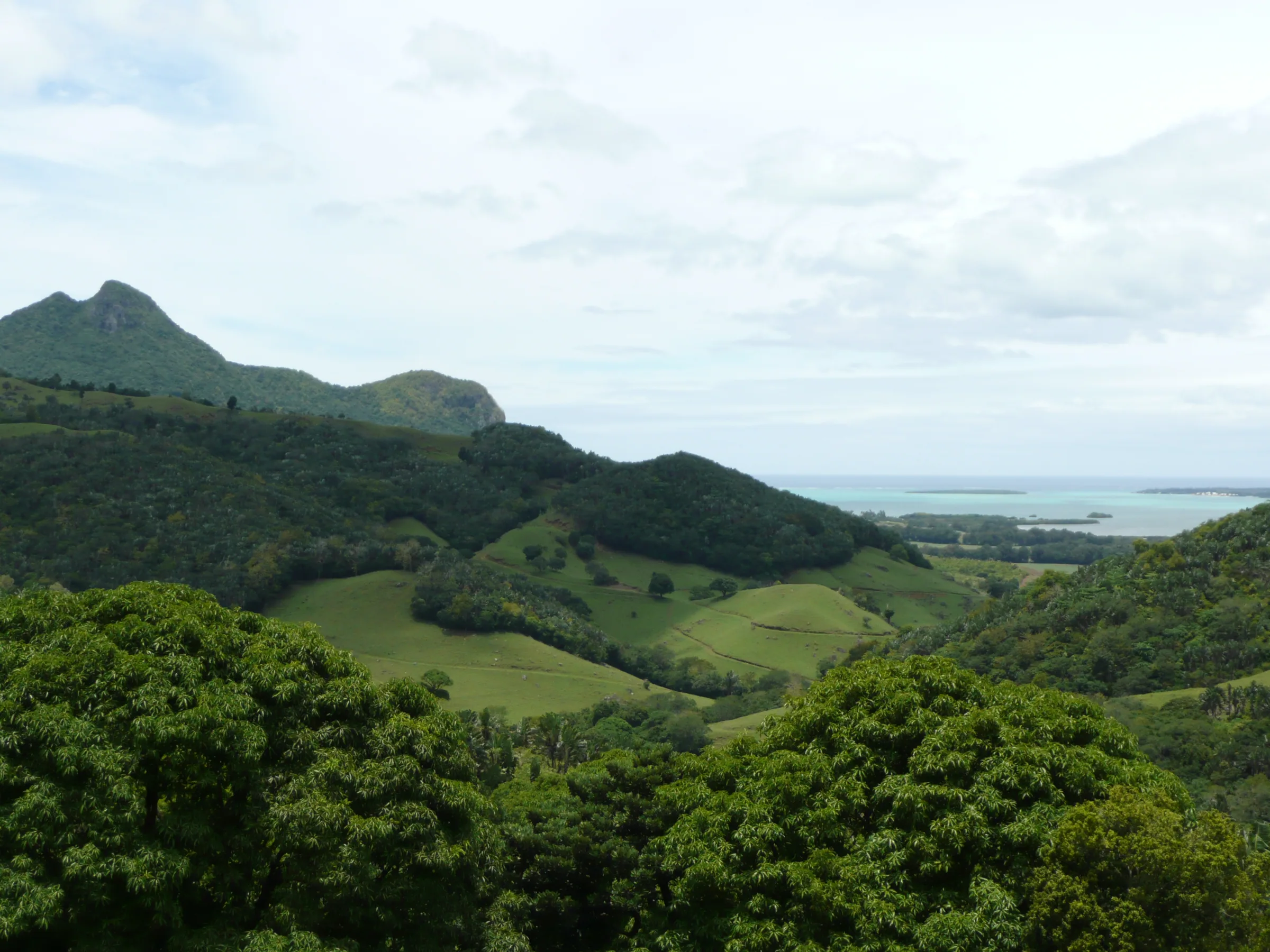
Lion Mountain belongs to the East Coast Mountains Key Biodiversity Area, a block of steep, wet forest that is one of the few places on the island where native plants and birds survive outside the national park. Most of what you walk through is introduced, because less than 2 percent of the native forest of Mauritius remains, but the restoration in the Vallée de Ferney below the northern slopes has brought back the Mauritius kestrel, and one has been seen over the mountain itself.
Read the guide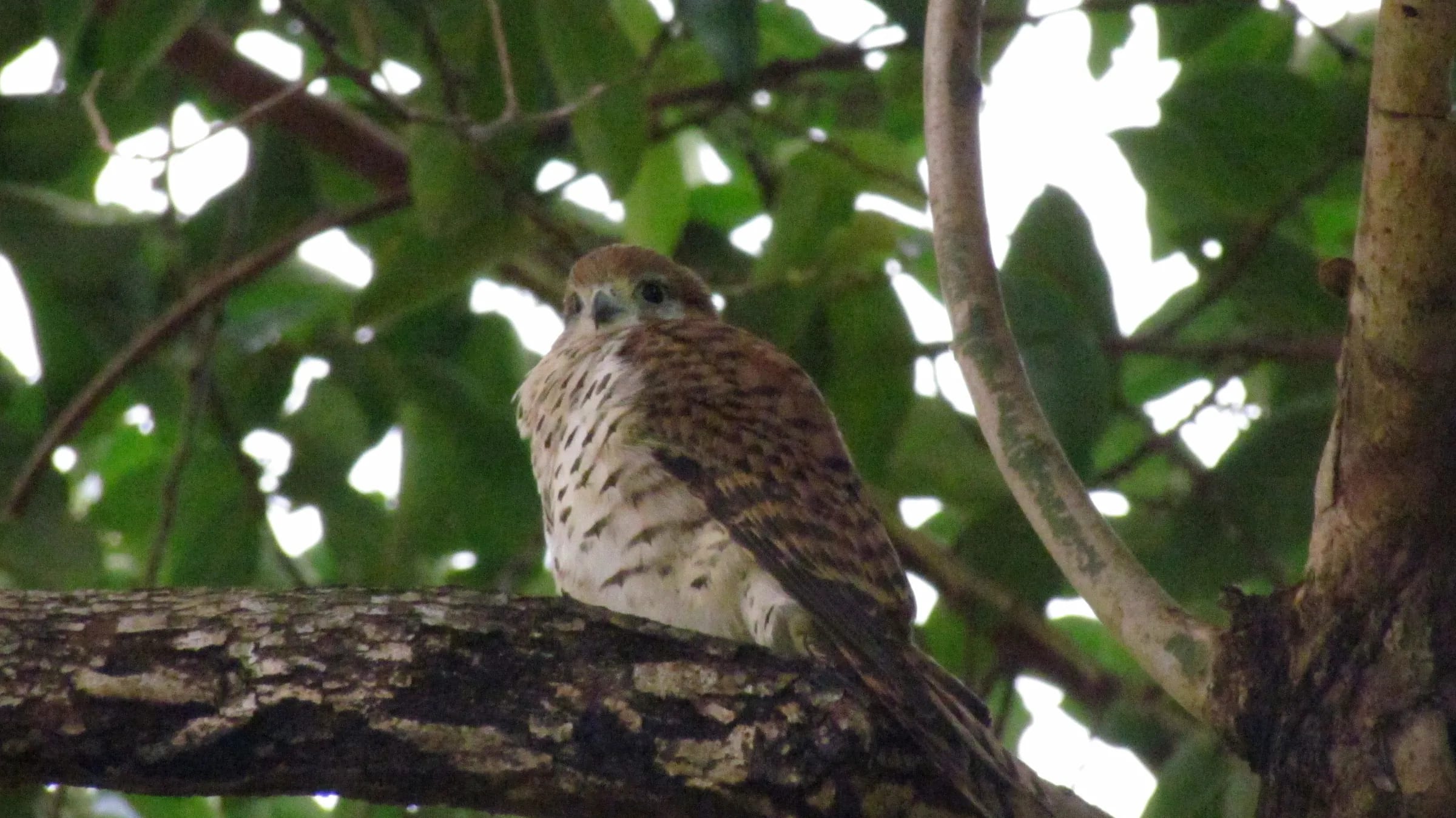
A Key Biodiversity Area with no formal protection
The mountains of the east side of Mauritius are listed together as the East Coast Mountains Key Biodiversity Area, known nationally as the Montagnes de l’Est. The area covers about 9,704 ha between roughly 60 m and 560 m above sea level and takes in Villars, Bambou, Camizard, Lion Mountain, Montagne des Créoles, Montagne Brise, Piton Rouge and Table à Perrot. The factsheet describes the habitat as subtropical moist montane forest fed by orographic rainfall from the south-east trade wind, which is a precise way of saying that the wind hits these ridges first and drops its rain on them.
The same factsheet records 0 percent formal protection. Parts of the range are Mountain Reserves under the Forestry Service, and two private conservation programmes, at the Vallée de Ferney and at Kestrel Valley, do the work that a national park would do elsewhere. On Lion Mountain itself there is no gate, no fee and no ranger, which is part of its appeal and also part of the reason its forest is in the state it is.
What the forest has become
Mauritius has lost almost all of its original vegetation. Less than 2 percent of the indigenous forest ecosystems of the island remain, and the Key Biodiversity Area describes its own forest as invaded by introduced species, mixed with secondary forest, plantations, cane fields, vegetable plots and deer pasture. On Lion Mountain the lower slopes are cane, then a belt of shaded woods on the flanks, then roots, brush and grass on the ridge. The trail notes describe native vegetation as abundant, but what you are mostly looking at is a tangle of introduced plants with native survivors among them.
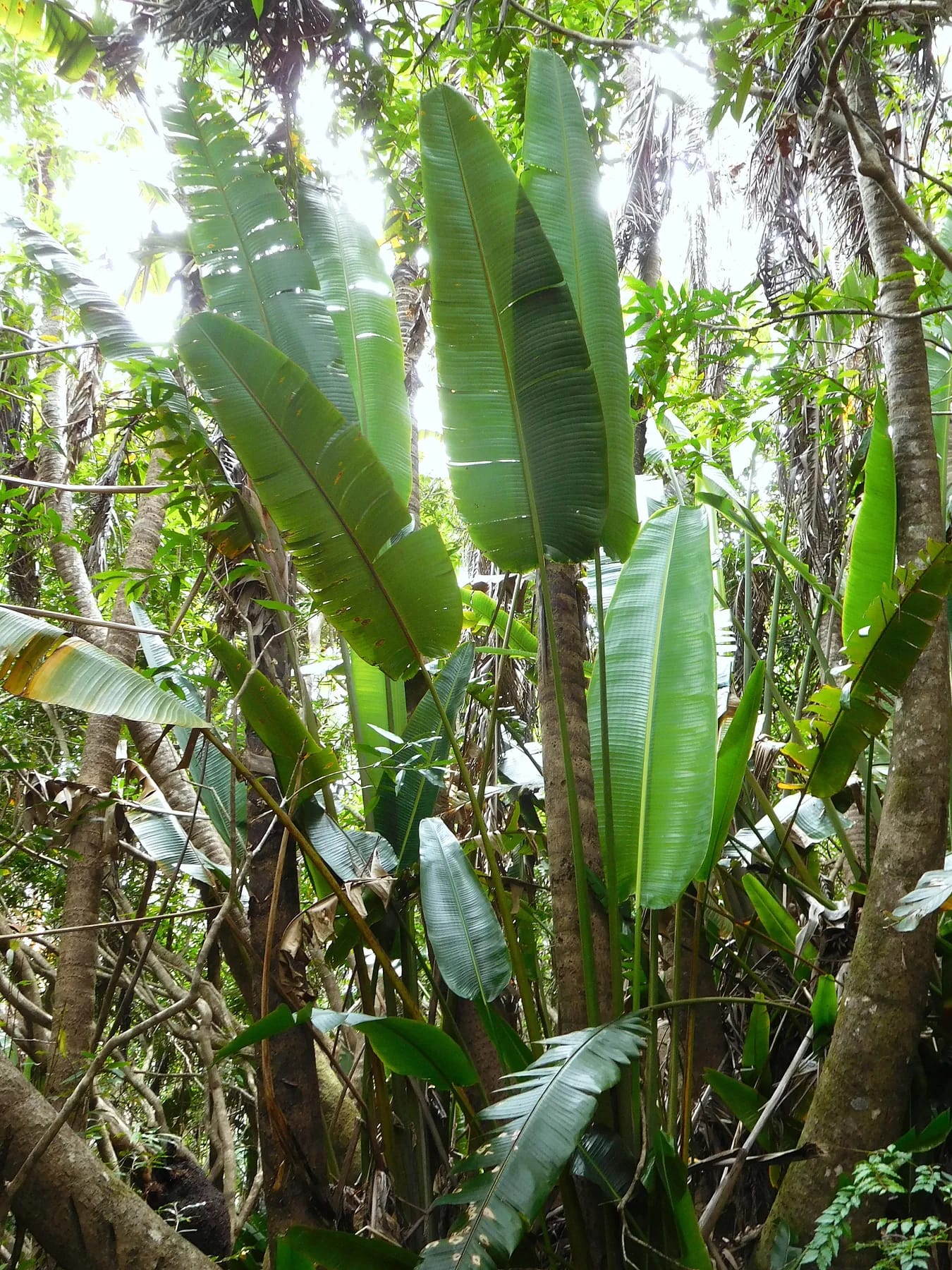
Two plants are easy to recognise. At the foot of the mountain and on the descent there are stands of traveller’s tree, the fan-shaped ravenala from Madagascar that lines so many Mauritian roadsides, and a whole grove of it is noted on the way down. Higher up, Chinese guava is the dominant invader on these ridges, and on the summit of Montagne Bambous, the highest point of the range, it covers the top entirely. The ebony that brought the Dutch here in 1638 has almost gone from the mainland, and the last dry coastal ebony forest stands on Île aux Aigrettes in the lagoon below.
The Vallée de Ferney restoration
The best place to see what the forest used to be is the Vallée de Ferney, the valley immediately below the mountain’s north-western flank. A highway was once scheduled to run through it. Surveys for the road found plants that were either new to science or thought to be extinct, including the critically endangered bois clou, Eugenia bojeri, and local protests saw the project scrapped. A reserve followed, with the Mauritian Wildlife Foundation involved from 2006. Sources differ on its size, giving a 200 ha reserve in one account and a 103 ha conservation zone under a trust set up in 2007 in another, inside a private estate of about 3,100 ha.
The work since has been slow and done by hand. Invasive plants have been removed from about 10 ha of forest so far. More than 30,000 endemic trees have been planted and about 11,000 more are growing in the nursery. The manglier vert, Sideroxylon puberulum, is under protection, and the estate lists ebony, bois clou and takamaka among its trees. About 150 endemic birds have been released into the valley, including echo parakeets, pink pigeons bred on site and paradise flycatchers. Entry to the valley is paid and its trails close in the afternoon, which the Ferney page on this site explains. From the Lion Mountain ridge you simply look down into it.
The Mauritius kestrel, from four birds to a few hundred
The Mauritius kestrel, Falco punctatus, is the reason conservationists come to this corner of the island. In 1974 there were four wild birds left, and it was listed as Critically Endangered in 1985. A captive-breeding and release programme turned it around. It was downlisted to Vulnerable in 1994 and has stood at Endangered since 2014. Reintroductions into the eastern forests began at Ferney in 1987, with releases from 1988 to 1993, and the Bambous range, with Ferney at its foot, has held kestrels ever since.
The numbers are still small and the recent trend is worrying. The Mauritian Wildlife Foundation reported 27 nest boxes and 19 breeding pairs at Ferney fledging 23 chicks in the 2023 to 2024 season, while a journalist’s account from the valley gives 14 or 15 pairs. For the island as a whole, estimates range from about 400 birds in 2019 to about 250 in the Foundation’s 2025 reporting, which also notes that the eastern population may now be declining. It is a small falcon, 26 to 30.5 cm long with a wingspan of about 45 cm, so it is easy to miss against the trees.
You might see one. A National Geographic writer who climbed Lion Mountain without a guide briefly saw a wild kestrel on the mountain itself, and a hiker logged one at the Ferney valley viewpoint in November 2023. Neither is a promise. The reliable way to see the bird is the daily feeding at Ferney at midday, the only site on the island where it happens, and the Foundation suggests arriving by 11:30.
Pink pigeons, echo parakeets and the islet in the lagoon
The pink pigeon has followed a similar path. Fewer than ten birds were left in the early 1970s and there are now more than 400, with Ferney one of the places where they are bred and released. Echo parakeets have been released in the valley as well. On the mountain itself the honest expectation for a hike is the introduced birds that have replaced the native ones across most of the island, with a native bird as a bonus rather than a certainty.
The lagoon below completes the picture. Île aux Aigrettes, the 26 to 27 ha coral islet about 850 m off the Mahébourg shore and a nature reserve since 1965, has been cleared of invasive plants and replanted by the Mauritian Wildlife Foundation since the 1980s, with more than 300,000 plants put in. It holds pink pigeons, the Mauritius fody and the olive white-eye among birds, Telfair’s skink, the ornate day gecko and Günther’s gecko among reptiles, and Aldabra giant tortoises introduced to do the grazing and seed-spreading work of the island’s extinct tortoises. Its ebony, Diospyros egrettarum, is the last of the dry coastal ebony forest. Guided visits have run since 1998 and leave from Pointe Jérôme.
Flying foxes, macaques and the other arrivals
The Mauritian flying fox, Pteropus niger, is a fruit bat with a wingspan of up to 80 cm, and fruit bats are a regular sight over Ferney. It is listed as Endangered by the IUCN and is at the centre of a long argument between fruit growers and conservationists. Government estimates put the population at about 100,000 in 2015 and 65,000 in 2018, figures that conservationists dispute, and culls were approved in October 2015 and again in 2018.
Almost everything else with fur is introduced, and most of it is a problem for the native wildlife. Long-tailed macaques probably arrived as Dutch pets around 1602 and there are now 25,000 to 35,000 in the wild. You may meet a troop on the ridge, and they are listed among the threats to the area’s wildlife. Rats, the Indian lesser mongoose and feral cats are the other main threats named for the Key Biodiversity Area, together with the invasive plants. Deer graze parts of the area as pasture, and Ferney keeps a herd on the estate.
| Species | Status | Where | Note |
|---|---|---|---|
| Mauritius kestrel | Endangered; roughly 250 to 400 birds | Ferney, occasionally over the ridge | Four wild birds in 1974; daily feeding at Ferney at midday |
| Pink pigeon | Over 400 birds, from fewer than 10 in the early 1970s | Ferney and Île aux Aigrettes | Bred and released at Ferney |
| Echo parakeet | Released at Ferney | Ferney forest | Among the 150 endemic birds released in the valley |
| Mauritian flying fox | Endangered | Over Ferney and the coast | Wingspan up to 80 cm; culls approved in 2015 and 2018 |
| Long-tailed macaque | Introduced, 25,000 to 35,000 in the wild | Anywhere on the mountain | Probably arrived as Dutch pets around 1602 |
| Aldabra giant tortoise | Introduced as a stand-in | Île aux Aigrettes and the Ferney tortoise reserve | Replaces the island’s extinct tortoises |
| Chinese guava | Invasive | Ridges and summits of the range | Covers the summit of Montagne Bambous |
| Traveller’s tree | Introduced from Madagascar | Foot of the mountain | A grove on the descent to Vieux Grand Port |
What visitors can do
The mountain has no warden, so its condition depends on the people who climb it. None of this is complicated, and all of it matters more here than on a managed trail.
- Stay on the path. The ridge is narrow and the vegetation beside it is the only thing holding the clay soil in place.
- Light no fires. The upper mountain is dry grass and brush for much of the year and there is nobody up there to put a fire out.
- Take every piece of litter back down, including fruit peel and tissues.
- Do not feed the macaques. They are already listed among the threats to the native wildlife of these mountains.
- Leave dogs at home if you plan to continue into the Vallée de Ferney, which does not admit domestic pets.
- Pick nothing you cannot identify. Some of the rarest plants on the island were found in the valley below by people who were looking for a road.
- If you see a kestrel, note the place and time and tell the Mauritian Wildlife Foundation, which monitors the eastern population.
Questions people ask
Are there kestrels on Lion Mountain?
Sometimes. The Mauritius kestrel was reintroduced to the Vallée de Ferney, directly below the mountain, from 1987, and the Mauritian Wildlife Foundation counted 19 breeding pairs there in the 2023 to 2024 season. A National Geographic writer saw a wild kestrel on Lion Mountain itself and hikers have logged them at the Ferney viewpoint, but nobody can promise a sighting. The daily midday feeding at Ferney is the dependable option.
Is there any native forest on Lion Mountain?
Fragments. The East Coast Mountains Key Biodiversity Area describes its subtropical moist forest as invaded by introduced species, and Chinese guava dominates the ridges of the Bambous range. Native trees survive among the invaders, and the Vallée de Ferney below the mountain has hand-cleared about 10 ha and planted more than 30,000 endemic trees to show what the forest looked like. Less than 2 percent of the island’s original forest remains.
Are there monkeys on Lion Mountain?
Yes. Long-tailed macaques, probably descended from animals the Dutch brought as pets around 1602, live across the island, with an estimated 25,000 to 35,000 in the wild, and troops are seen in the woods and on the ridge. They are listed among the threats to the native wildlife of these mountains. Keep food packed away and do not feed them.
What animals live on Lion Mountain?
Mostly introduced ones. Long-tailed macaques, rats, mongooses and feral cats are the mammals you are likeliest to notice, with deer on the estates around the mountain. Mauritian flying foxes fly over Ferney at dusk. Among native birds the Mauritius kestrel has been seen on the mountain, and pink pigeons and echo parakeets have been released in the valley below. Mosquitoes are the animal reviewers mention most.
Is Lion Mountain a protected area?
Not formally. It lies inside the East Coast Mountains Key Biodiversity Area, an international designation of about 9,704 ha, but the factsheet records 0 percent formal protection for the area. Parts of the range are Mountain Reserves under the Forestry Service, and the Vallée de Ferney is a private conservation zone with paid entry. The Vieux Grand Port trail itself has no gate, fee or ranger.
Can you see giant tortoises near Lion Mountain?
Yes, in two places. Aldabra giant tortoises have been introduced to Île aux Aigrettes, the reserve islet in the lagoon below the mountain, to replace the grazing and seed-spreading role of the island’s extinct native tortoises, and the Vallée de Ferney estate keeps a tortoise reserve. Both are visited on paid guided tours. There are no tortoises on the mountain trail itself.
Walk into the valley below
The Vallée de Ferney page covers the conservation valley on the mountain’s northern side, the kestrel feeding and the easier walks.