
Île aux Aigrettes
Île aux Aigrettes is the low, green islet you see in the lagoon from the lion’s head, about 850 m off the coast south of Mahébourg. It has been a nature reserve since 1965 and, since the 1980s, the site of a long restoration programme that has brought back the last coastal ebony forest in Mauritius and given pink pigeons, fodies and giant tortoises a home. You visit on a short boat ride and a guided walk of 1.5 to 2 hours run by the Mauritian Wildlife Foundation.
Read the guide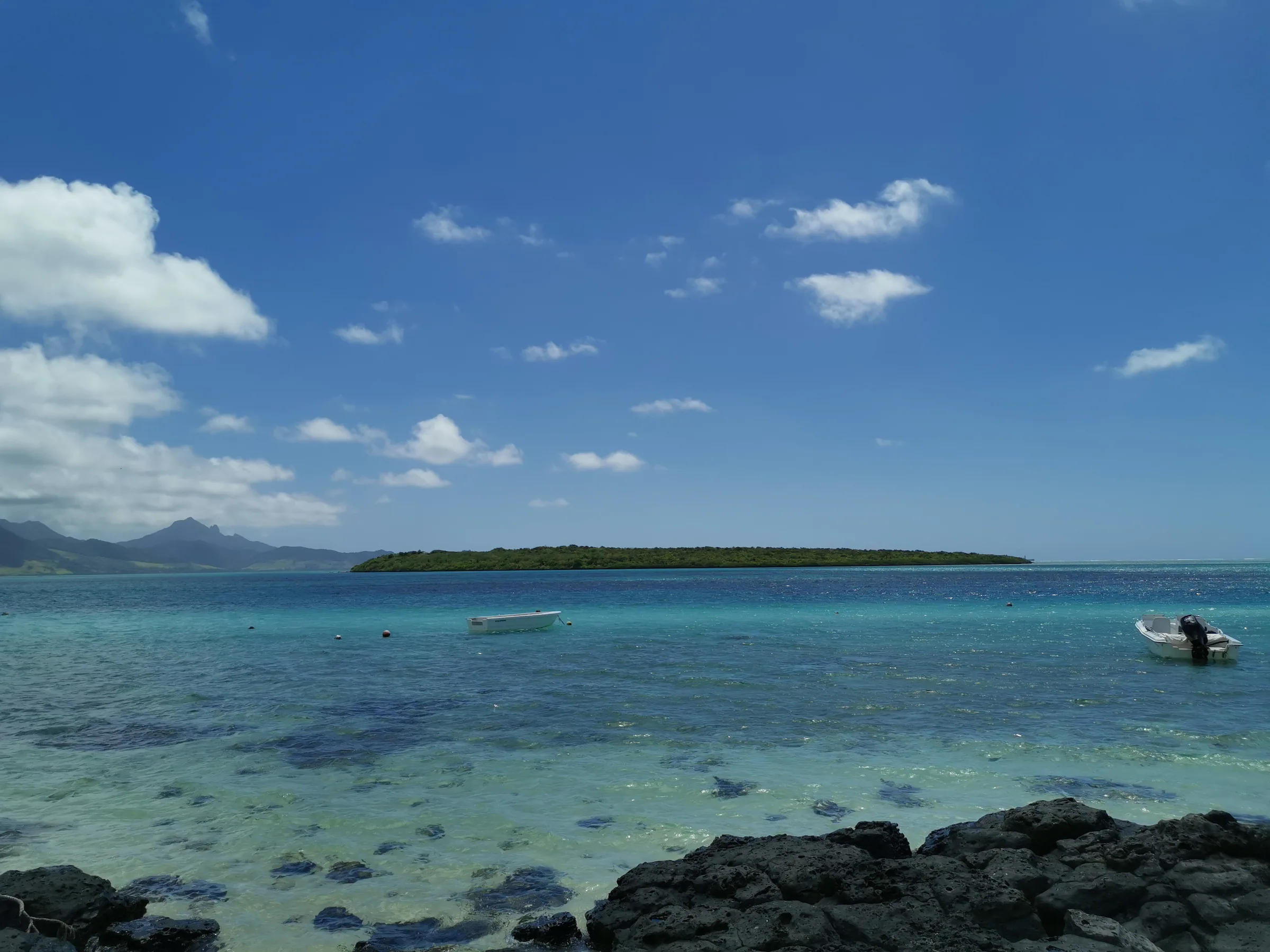
A coral islet, not a volcanic one
Almost everything you stand on in Mauritius is basalt. Île aux Aigrettes is the exception, a flat islet of coralline limestone, 26 to 27 ha in area, lying about 850 m off the shore of the lagoon and about 1 km from Mahébourg. Because it is limestone rather than lava it grew a different forest from the mainland, a dry coastal ebony woodland, and because it is an island that forest survived long enough to be saved. It is the last of its kind in Mauritius.
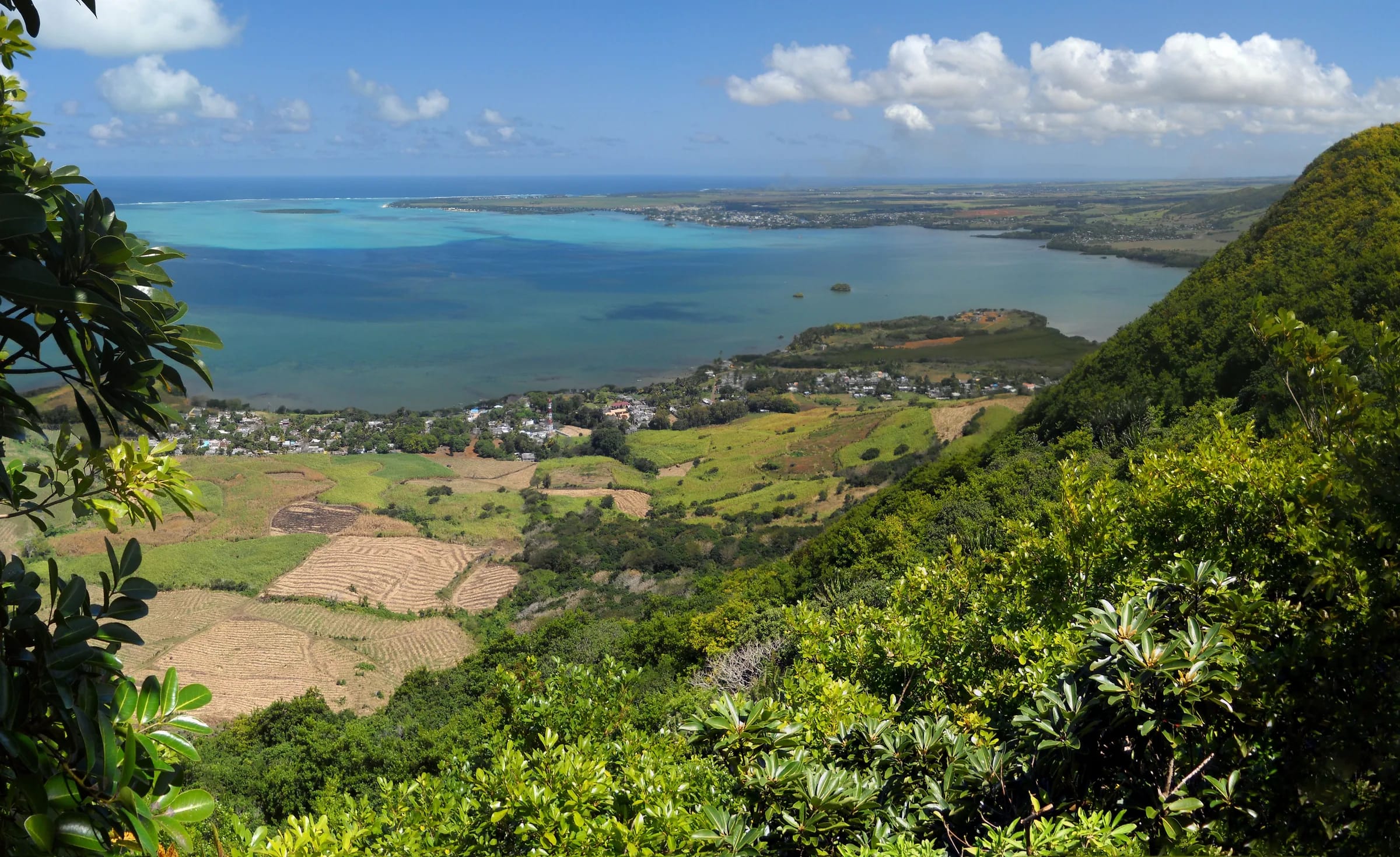
It was declared a nature reserve in 1965. From the lion’s head the islet is about 6.6 km away in a straight line, a green oval inside the reef, and it is worth knowing what you are looking at. The ebony on the islet is the same kind of forest the Dutch cut on the mainland for export in the 1600s, when enslaved labourers from Madagascar were brought to fell it. On the mainland that forest is gone. Out there it is coming back.
From limekiln and garrison to reserve
The islet was not always a sanctuary. A limekiln burned coral here in the 1900s, and during the Second World War it was a military base. By the time the Mauritian Wildlife Foundation began restoration in the early 1980s, one account gives 1987, the islet had been cut over, built on and crowded by introduced plants. Over the decades since, teams have weeded out the invasive growth and more than 300,000 native plants have gone into the ground.
Guided eco-tours began in 1998 and school visits in 2009. The point of the tours is partly income for the work and partly to show what a Mauritian lowland forest looked like before the island was cleared, which is something you cannot see anywhere else at sea level.
The animals you are likely to see
The islet is a refuge for species that were nearly lost. The pink pigeon, down to fewer than ten birds in the early 1970s, now numbers more than 400 across its sites and breeds here. The Mauritius fody and the Mauritius olive white-eye, two small endemic songbirds, live in the restored canopy. On the ground and in the trees you may find Telfair’s skink, a large lizard, the ornate day gecko and Günther’s gecko.
The Aldabra giant tortoises are the animals most visitors come for. They are not Mauritian. The island’s own giant tortoises are extinct, and Aldabra tortoises were introduced as ecological stand-ins to do the grazing, browsing and seed-spreading the lost species once did. The tortoises are resident and easy to find on a tour; the birds depend on the day, the season and your guide’s ear, and nobody can promise a pink pigeon.
| Species | What it is | Status on the islet |
|---|---|---|
| Pink pigeon | Endemic pigeon, fewer than 10 birds in the early 1970s, over 400 now | Breeds on the islet |
| Mauritius fody | Small endemic songbird | Resident |
| Mauritius olive white-eye | Small endemic songbird | Resident |
| Telfair’s skink | Large endemic lizard | Resident |
| Ornate day gecko and Günther’s gecko | Endemic geckos | Resident |
| Aldabra giant tortoise | Introduced as a stand-in for the extinct Mauritian tortoises | Resident |
| Ebony, Diospyros egrettarum | The islet’s own ebony species, the heart of the restored forest | Planted and protected |
How to visit
The islet is a reserve. You cannot land on it independently, and the only way in is the guided eco-tour run by the Mauritian Wildlife Foundation.
Book ahead
Tours are booked through the foundation’s online booking partner, reached from its Île aux Aigrettes page. Older documents give a reservations line on (230) 631 2396 and the address reservation@mauritian-wildlife.org. Check the current departure times when you book, since they change with the season.
Get to Pointe Jérôme
Departures leave from the old sand jetty at Pointe Jérôme, next to the Preskil resort on the coast south of Mahébourg. It is a short drive or taxi ride from Mahébourg, Blue Bay or Pointe d’Esny.
Cross by boat
The crossing takes about five minutes. The islet is 850 m offshore inside the lagoon, so the water is usually calm, but a strong south-easterly can make the ride bumpy.
Walk the trail with a guide
The guided walk lasts 1.5 to 2 hours on a flat trail through the restored forest, with stops for the tortoises and whichever birds are about. It is easy underfoot, but the sun is strong on a low island; a hat and water matter more than boots.
Café and shop
There is a small café and shop on the islet. Give yourself about two hours in total for the crossing, the walk and the return.
What it costs
We do not quote a price. The sources we checked at the time of writing did not give a current fee, and the foundation sets its rates and changes them. Check the foundation’s Île aux Aigrettes page or ask when you book. The fee supports the foundation’s conservation work on the islet and elsewhere in Mauritius.
Combining the islet with Lion Mountain
The two go together because they look at each other. From the lion’s head the islet is laid out in the lagoon below; from the islet’s shore the lion stands across the bay to the north-east. A morning on one and an afternoon on the other gives you the bay of Grand Port from above and from inside in a single day.
A workable plan is the hike at first light, back in Vieux Grand Port by mid-morning, the drive around the bay to Mahébourg for a late breakfast, and a tour of the islet in the early afternoon. Check tour times with the foundation when you book, because the departure schedule, not the hike, is the fixed point of the day. If you have only an afternoon, the islet is a better use of it than a rushed climb.
If you are staying at Pointe d’Esny or Blue Bay, the jetty at Pointe Jérôme is minutes away and the tour can be slotted into any afternoon of the stay, which takes the pressure off the hiking day.
Behaving on a reserve
The islet is a working conservation site that happens to admit visitors. A few habits keep it that way.
- Stay with your guide and on the trail. The forest floor is where the skinks and the seedlings are.
- Do not touch, feed or ride the tortoises, and do not pick anything up to take home.
- Keep bags closed. Seeds and small animals travel in luggage, and the islet depends on nothing new arriving.
- Boats land only with the foundation. Private landings are not permitted.
- Take your rubbish back with you.
Questions people ask
Are there giant tortoises on Île aux Aigrettes?
Yes. Aldabra giant tortoises live on the islet and you will almost certainly see them on a tour. They are not native. The Mauritian giant tortoises are extinct, and the Aldabra species was introduced as an ecological stand-in to graze, browse and spread seeds the way the lost tortoises did. Do not touch or feed them; your guide will tell you how close is close enough.
How do I get to Île aux Aigrettes?
Only with the Mauritian Wildlife Foundation, which runs the guided eco-tours. Book through the foundation’s online partner, then go to the old sand jetty at Pointe Jérôme, next to the Preskil resort on the coast south of Mahébourg. The boat crossing takes about five minutes and the guided walk 1.5 to 2 hours. You cannot land on the islet independently.
How much does a visit to Île aux Aigrettes cost?
We do not quote a price because the sources we checked did not give a current one, and the foundation sets and changes its rates. Check the foundation’s Île aux Aigrettes page or ask when you book. The fee goes to the organisation that does the restoration work, which is the right place for it.
How long does the Île aux Aigrettes visit take?
About two hours in all. The boat crossing from Pointe Jérôme takes about five minutes each way and the guided walk lasts 1.5 to 2 hours on a flat trail through the restored forest, with stops for the tortoises and the birds. Allow a little extra for the café and shop and for waiting at the jetty.
Can I see Île aux Aigrettes from Lion Mountain?
Yes. From the lion’s head the islet is about 6.6 km away in a straight line, a low green oval inside the reef south of Mahébourg, and several accounts of the summit view single it out. It is the easiest of the lagoon’s islands to identify because of its size and its position close to the shore at Pointe Jérôme.
Why is Île aux Aigrettes important?
It holds the last dry coastal ebony forest in Mauritius, on a coralline-limestone islet of 26 to 27 ha that has been a nature reserve since 1965. Since the 1980s the Mauritian Wildlife Foundation has weeded out invasive plants, planted more than 300,000 native plants and given endangered species such as the pink pigeon, the Mauritius fody, the olive white-eye and Telfair’s skink a secure home.
Can I swim or picnic on Île aux Aigrettes?
No. It is a nature reserve, landings are made only with the foundation’s boats, and the visit is a guided walk. There is a small café and shop, but it is not a beach outing. For a swim, Blue Bay is a short drive south, and the lagoon around the islet is covered by boat and snorkelling trips that start elsewhere.
Fit the islet into the day
The day plan shows how the dawn climb, Mahébourg and an afternoon on Île aux Aigrettes or at Blue Bay fit together.