
A full day around Lion Mountain
Climb while the air is cool, come down before the sun is overhead, spend the hot middle of the day under a roof and the afternoon in the water, then watch the light leave the lion from the Mahébourg waterfront. Everything happens within about 12 km of coast. This page gives the full day stage by stage, a half-day version and what to do when it rains.
Read the guide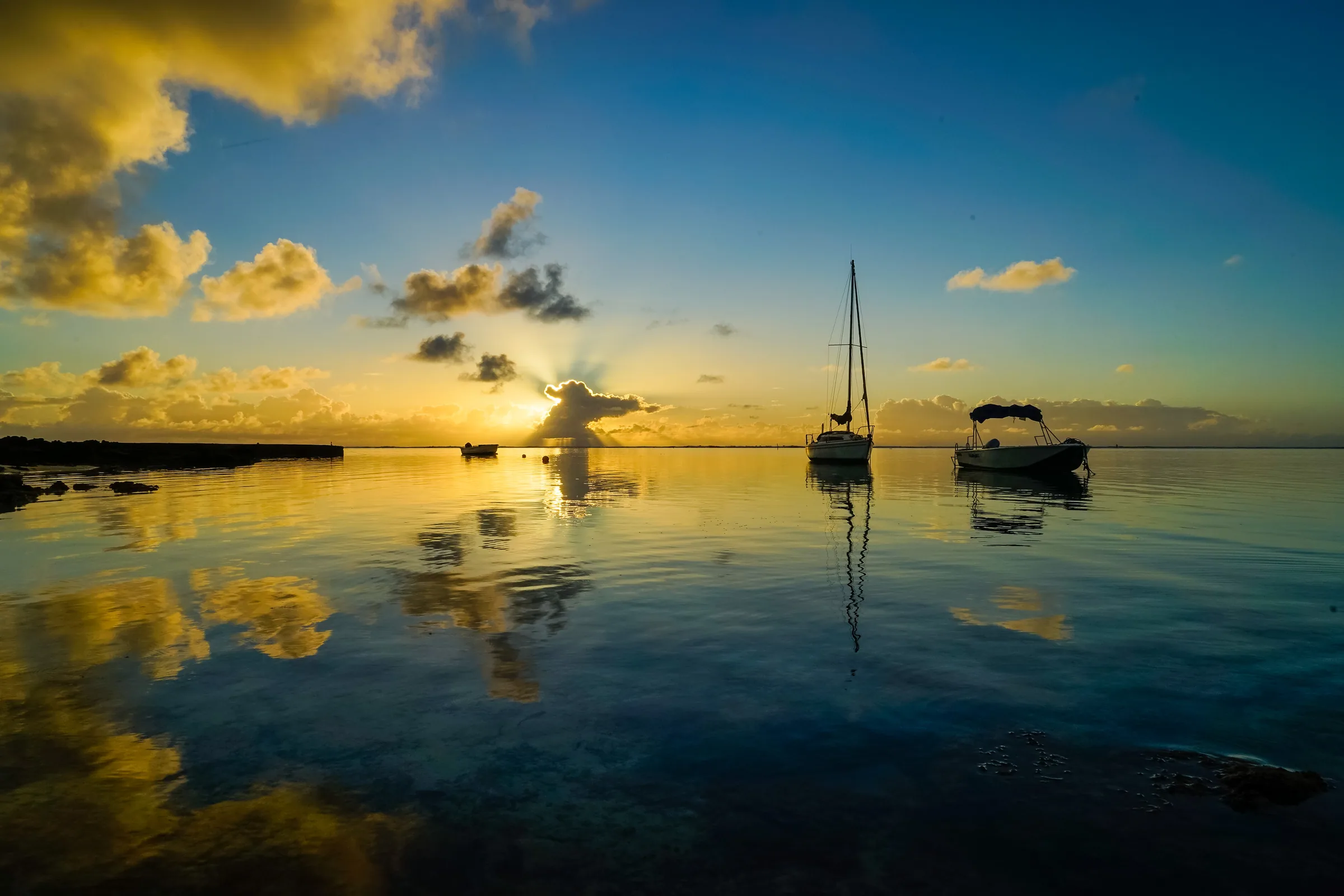
How the day fits together
The logic is simple. The mountain has no water, no shade on the upper half and an exposed summit, so it belongs at dawn and nowhere else in the plan. The Frederik Hendrik Museum stands a few hundred metres from the trailhead, so it comes straight after the climb rather than after a drive. Mahébourg is roughly 15 minutes down the coast road for a late breakfast or lunch, Blue Bay and the boats to Île aux Aigrettes are a few minutes beyond, and the waterfront in Mahébourg faces the lion for the last light.
Sunrise moves by almost an hour and a half through the year, from 05:22 in November to 06:45 in July, and sunset from 17:38 in June to 18:55 in January, so the table gives a winter and a summer version of the same day. The times are what most hikers manage, not a schedule to race.
| Stage | June to August | November to February | Note |
|---|---|---|---|
| At the trailhead in Vieux Grand Port | 06:15 | 05:15 to 05:30 | First light, about half an hour before sunrise |
| On the summit | 08:00 to 08:30 | 07:00 to 07:30 | Most hikers need 1.5 to 2 hours for the climb |
| Back in the village | 09:30 to 10:30 | 08:30 to 09:30 | The descent takes almost as long as the climb |
| Frederik Hendrik Museum | 10:00 to 11:00 | 09:00 to 10:00 | Opens 09:00 most days, 11:00 on Wednesday, Sunday until 12:00 |
| Mahébourg market and waterfront | 11:00 to 13:00 | 10:00 to 12:30 | Late breakfast or early lunch |
| Blue Bay or Île aux Aigrettes | 13:30 to 16:30 | 13:30 to 17:00 | Book the islet in advance |
| Mahébourg waterfront for sunset | 17:15 to 17:45 | 18:15 to 18:55 | Dusk lasts about 20 minutes |
The full day, stage by stage
Seven stages, in the order the geography suggests. If you would rather eat before the museum, swap stages four and five.
Dawn in Vieux Grand Port
Be at the start behind the police station as the sky lightens, about half an hour before sunrise. Park on the street in the village, leave nothing visible in the car and carry at least 1.5 litres of water each. The first stretch runs through cane on a wide earth road where the route is unmarked, so load the GPX track on your phone.
The summit by mid-morning
The climb to the ridge is steep and rooty, then the ridge narrows and the last section onto the lion’s head has rock steps where you use your hands and real exposure on both sides. Most hikers reach the top within 1.5 to 2 hours. Anyone uneasy with drops can stop just below the head and still have most of the view. Sit down, eat, and look at the whole of the bay, Île aux Aigrettes, Mahébourg and the runway laid out below.
Down by late morning
The descent takes nearly as long as the climb, because the rock steps and the clay need care and the sun is now on the ridge. Aim to be back among the cane between 09:30 and 10:30 in winter, an hour earlier in summer. A change of socks and a second bottle of water in the car make the rest of the day better.
The Frederik Hendrik Museum at the foot of the trail
A few hundred metres from where you parked, on Royal Road, the museum stands on the site of the Dutch fort of 1638 and the French buildings that replaced it. The published hours are 09:00 to 16:00 on Monday, Tuesday, Thursday, Friday and Saturday, 11:00 to 16:00 on Wednesday and 09:00 to 12:00 on Sunday, closed on public holidays, with free admission. Because it is right there, see it now rather than driving back later. The naval museum in Mahébourg, the other history museum on this coast, has been closed for renovation since 15 December 2025 with no reopening date announced, so this is the one to see.
Breakfast or lunch in Mahébourg
Drive the coast road south for roughly 15 minutes, past the Ferney turn-off and over the Cavendish Bridge into town. The market is open every day and biggest on Monday; dholl puri and fritters from the stalls make the fastest breakfast, and biryani is ready from around midday. If you have time, the Biscuiterie Rault beside the bridge does a tour of about 20 minutes with a tasting of its cassava biscuits.
An afternoon on the water
Choose one. Blue Bay, a few minutes south, is a public beach inside a 353 ha marine park, with a lagoon shallow enough to swim and snorkel from the shore and glass-bottom boats working from the beach. Île aux Aigrettes, the restored coral islet in the lagoon, is visited on a guided tour of 1.5 to 2 hours after a short boat ride from Pointe Jérôme, run by the Mauritian Wildlife Foundation and best booked ahead. A catamaran day from Mahébourg or a snorkelling trip in the Grand Port lagoon are also bookable through Andeor if you would rather spend the afternoon on a boat.
Sunset from the Mahébourg waterfront
Finish on the esplanade at Pointe des Régates, by the battle memorial of 1899, which looks straight across the bay at the lion. The sun sets behind the island, so the mountain catches the last light and the shape reads best from here. Dusk is short at this latitude, about 20 minutes, and the last buses have left by 18:00, so have your transport settled before you sit down.
A half-day version
If you only have a morning, do the mountain and the museum and skip the rest. From a 06:15 winter start you can be back at the car by 10:30, through the museum by 11:30 and eating in Mahébourg by noon, which leaves the afternoon free for a flight, a drive across the island or a bed.
If you only have an afternoon, think carefully before you start. The upper half of the route has no shade, the rock is hot by midday, and in winter the light goes at about 17:40. A 13:00 start puts most hikers on the summit around 15:00 and back at the car around 16:30, which works in dry weather with no delays but leaves little margin. Fix a turnaround time of 15:30 at the latest, carry a head torch, and if you have not reached the ridge by then, come down and come back another morning. In summer the extra daylight helps, but the heat makes an afternoon start harder, not easier.
- Morning only: the hike, the museum and a market breakfast, finished by midday.
- Afternoon only in winter: a 13:00 start, a hard turnaround at 15:30 and a head torch in the bag.
- Afternoon only in summer: swim at Blue Bay, eat on the waterfront, and climb the next morning instead.
A rainy-day version
The south-east gets more rain than the west, and on the mountain the clay stays slippery long after a shower, fog can sit on the ridge and the rock steps on the head become genuinely dangerous when wet. If it is raining in the morning, or rained hard in the night, do not climb. Keep the mountain for the next dry morning, and read the forecast for the south-east specifically, not the island as a whole.
A wet day still has plenty in it. The Frederik Hendrik Museum is under a roof. The Biscuiterie Rault tour and tasting take about 20 minutes whatever the weather. The Mahébourg market trades in the rain. At the Vallée de Ferney the kestrel feeding happens at noon, with visitors asked to arrive by 11:30, and the estate restaurant looks at the mountain from under its own roof; check with the estate on the day, since outdoor activities depend on conditions.
Showers on this coast are often short, and the airport station records its driest months from September to November, so in winter a wet morning frequently clears by midday. Even then, give the mountain a full dry day before you go up.
Blue Bay or Île aux Aigrettes?
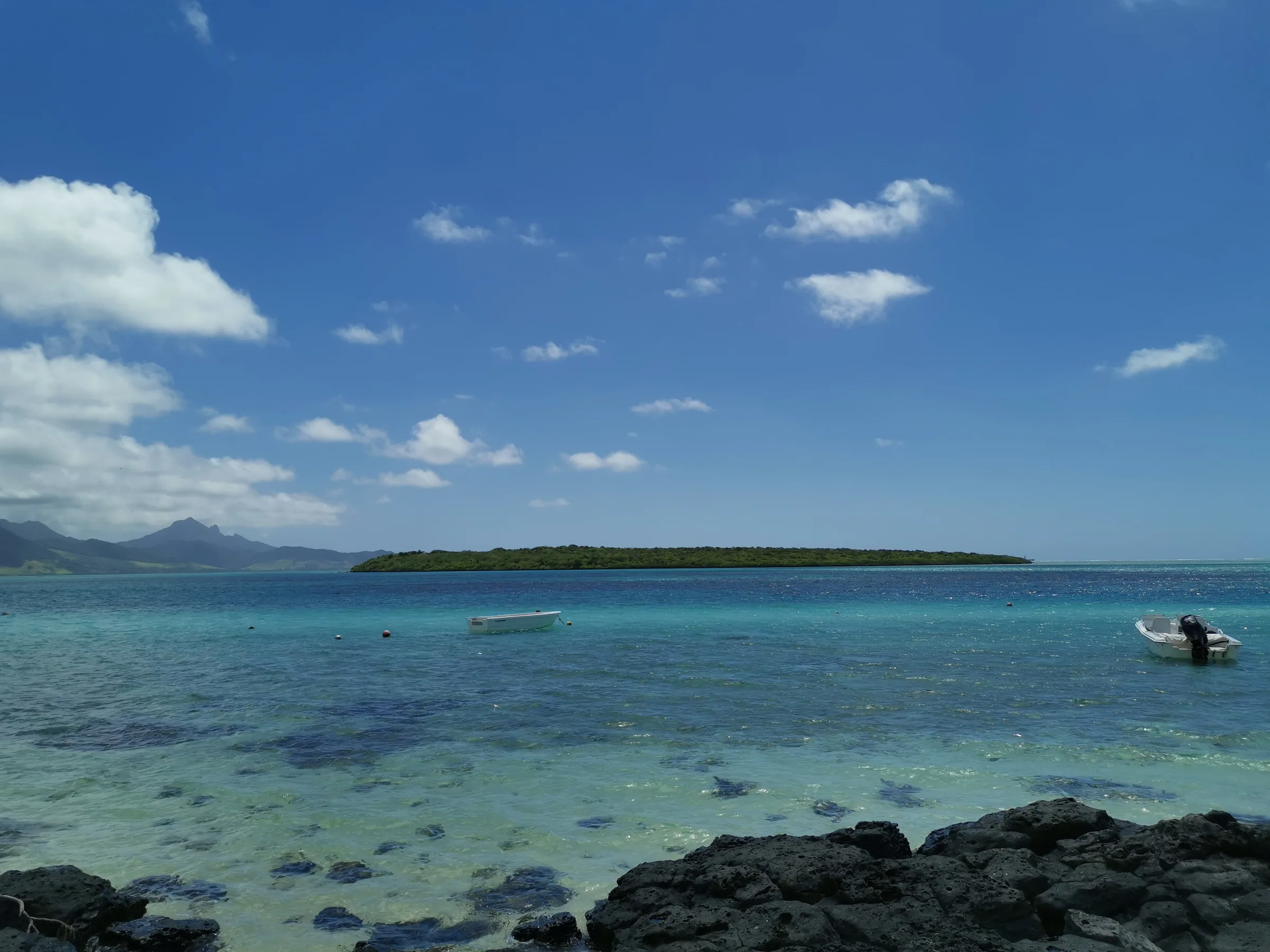
Blue Bay is the simpler choice. The marine park was declared a national park in October 1997, a marine park in June 2000 and a Ramsar wetland in January 2008, and its 353 ha hold 38 recorded coral species and about 72 fish species in a shallow lagoon. It is a public beach, so there is nothing to book, and glass-bottom boats and snorkelling trips work from the shore. It is busiest at weekends.
Île aux Aigrettes is the richer choice if you care about wildlife. The 26 to 27 ha coralline islet, about 850 m offshore and roughly 1 km from Mahébourg, has been a nature reserve since 1965 and holds the island’s last dry coastal ebony forest, home to Aldabra giant tortoises, pink pigeons, Mauritius fodies and Telfair’s skinks. Visits are guided, last 1.5 to 2 hours plus a boat ride of a few minutes from Pointe Jérôme, and are run by the Mauritian Wildlife Foundation; book in advance, since departures are fixed and limited. No sighting is ever guaranteed.
Getting around on the day
A hire car makes this day easy; the coast road links every stage. A taxi for the day is the next best option; agree the stages and the 3 to 4 hour wait in Vieux Grand Port in advance. Buses work for the afternoon but not for the dawn start. Route 9 links the airport and Mahébourg, route 198 runs from Port Louis, and coastal buses along the B28 stop at Old Grand Port, but no route number for the Mahébourg to Vieux Grand Port stretch is published online, rural services run roughly from 06:30 to 18:30 and nothing leaves Mahébourg after about 18:00.
If you are relying on buses, the honest version of this day is a bed in Vieux Grand Port or an early taxi to the trailhead, a coastal bus from the Old Grand Port stop back towards Mahébourg late in the morning, and a taxi for the sunset leg back to wherever you sleep.
Questions people ask
Can I hike Lion Mountain and visit Île aux Aigrettes on the same day?
Yes, and it is the natural pairing. A dawn climb has you back in Vieux Grand Port by late morning, which leaves time for the museum and a meal before an afternoon tour of the islet. Tours are guided, last 1.5 to 2 hours plus a short boat ride from Pointe Jérôme, and depart at fixed times, so book in advance and give yourself a comfortable margin to reach the jetty.
Is the Mahébourg naval museum open?
No. The National History Museum in Mahébourg, usually called the naval museum, has been closed for renovation since 15 December 2025 and no reopening date has been announced. The Frederik Hendrik Museum in Vieux Grand Port, on the site of the Dutch fort beside the trailhead, is open with free admission, and the Mauritius Museums Council site carries the current hours for both.
What time should I start the Lion Mountain hike?
At first light, about half an hour before sunrise, which ranges from 05:22 in November to 06:45 in July. The lower cane section is easy to walk in the half-light, the ridge is cool, and you reach the summit before the sun is high. It also gives you the whole of the rest of the day, which is the point of this plan.
Can I do the hike in the afternoon instead?
In dry winter weather, with care. A 13:00 start puts most hikers on the summit around 15:00 and back at the car around 16:30, before the 17:40 sunset, but the margin is small, so fix a turnaround time of 15:30 and carry a head torch. In summer the heat on the shadeless upper half makes an afternoon climb harder, and the morning is the better choice.
What if it rains on the day?
Do not climb. The clay stays slippery for hours after rain and the exposed rock on the lion’s head becomes dangerous when wet. Visit the Frederik Hendrik Museum, take the Biscuiterie Rault tour, walk the Mahébourg market and, if the estate confirms it, see the kestrel feeding at Vallée de Ferney at noon. Keep the mountain for the next fully dry morning.
Do I need a car for this itinerary?
It is far easier with one. A taxi hired for the day works well if you agree the waiting time at the trailhead. Buses cover the afternoon stages between Mahébourg and Blue Bay, and coastal buses stop at Old Grand Port, but they start too late for a dawn climb and nothing leaves Mahébourg after about 18:00, so the sunset leg needs a taxi or a bed in town.
Start with the climb
The hiking guide covers the route stage by stage, with the cane section, the ridge and the exposed steps onto the lion’s head.