
The Battle of Grand Port, 20 to 27 August 1810
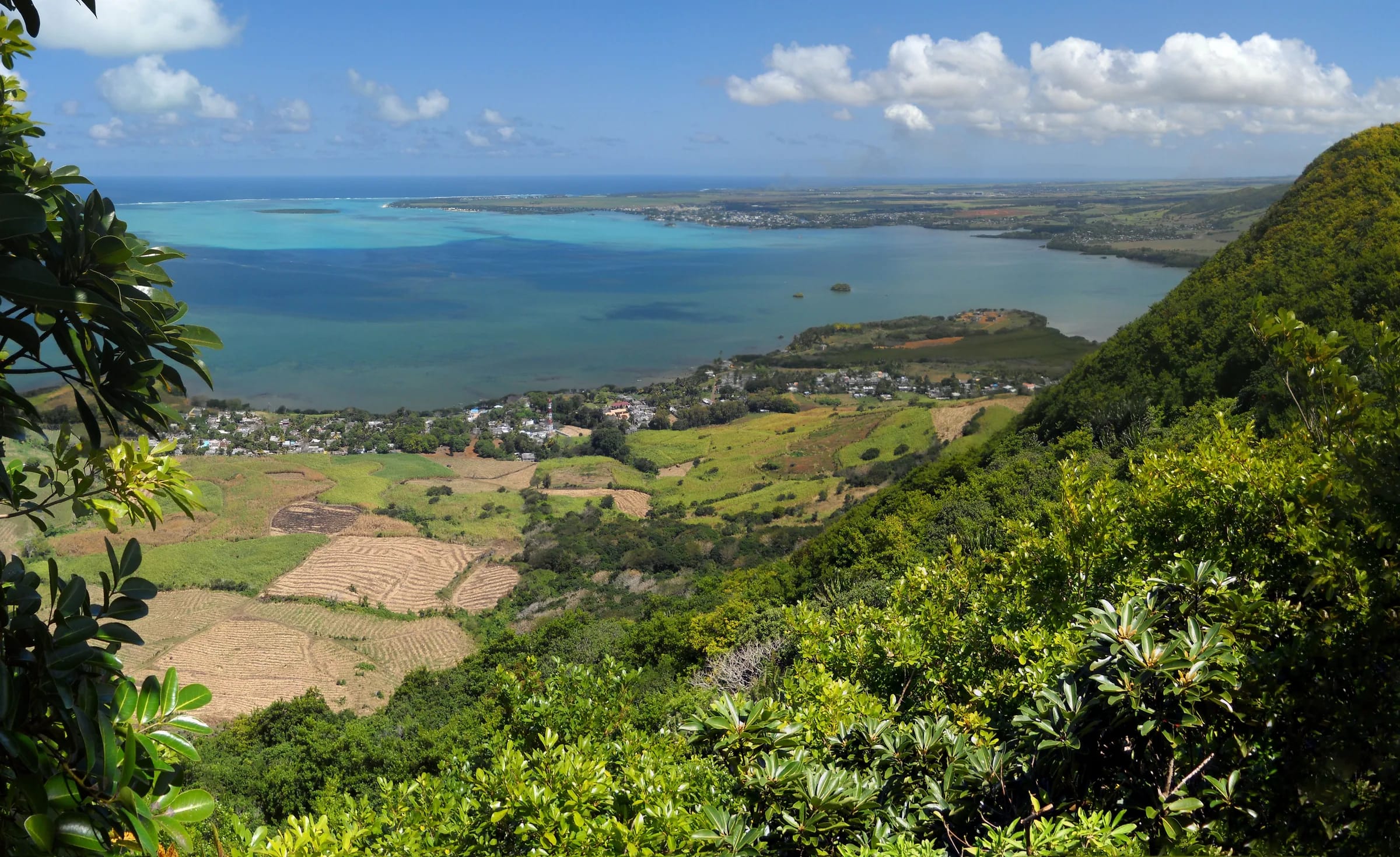
Between 20 and 27 August 1810 four British frigates fought a French squadron inside the reef of Grand Port and lost all four. It was the most significant defeat the Royal Navy suffered in the Napoleonic Wars, and it is the only naval battle whose name is carved on the Arc de Triomphe in Paris. The whole of it happened in the water you look down on from the ridge of Lion Mountain.
Read the guide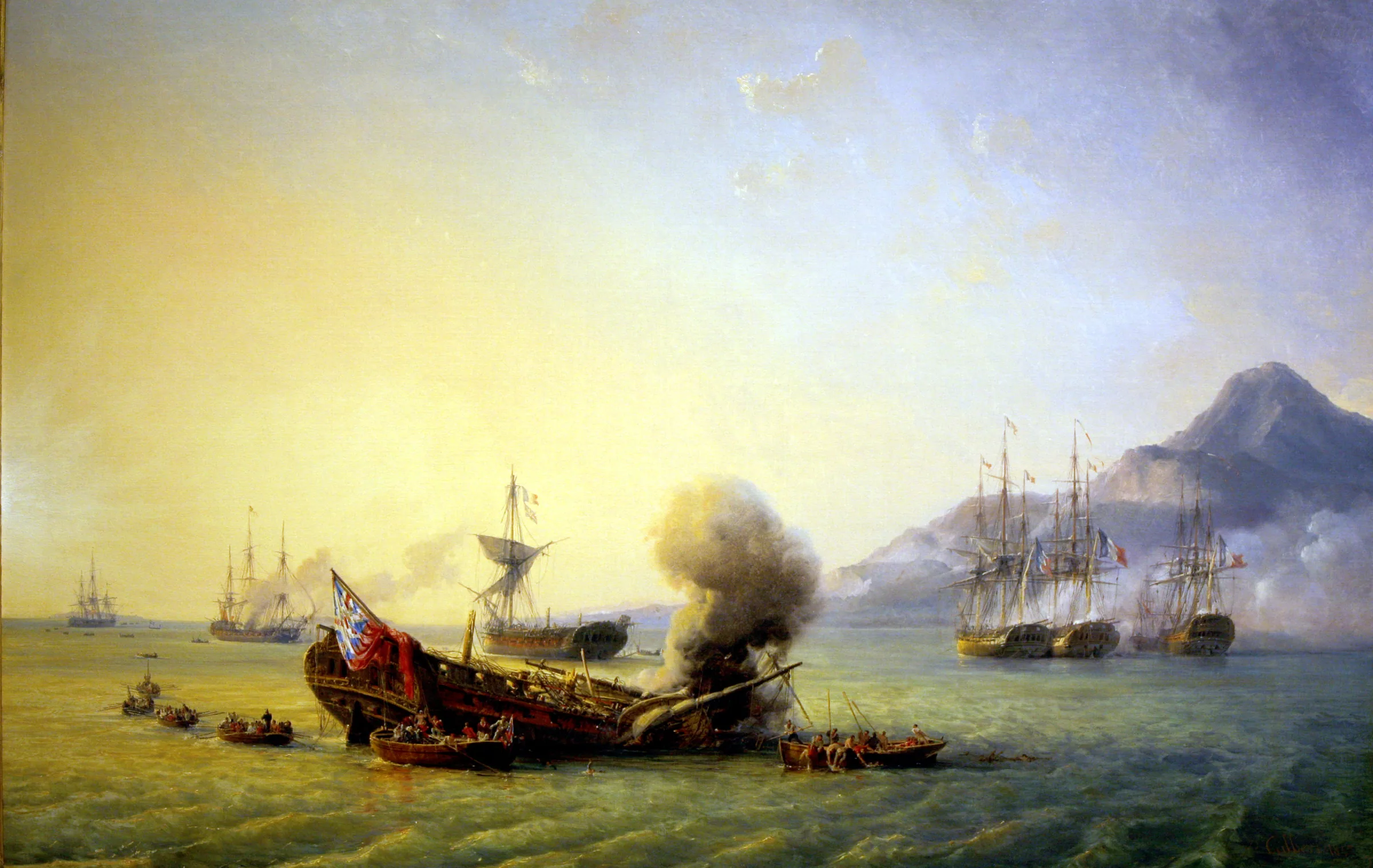
A lagoon with one safe channel
Grand Port is a bay protected by a coral reef. The only way in for a ship of any size is a winding channel through the coral at the south-eastern corner of the lagoon, guarded by a small island, Île de la Passe, on which the French had built a battery. The channel was marked by buoys and, more importantly, known in detail only to local pilots. Inside the reef the water is shallow and uneven. A sailing ship that strayed from the channel went aground, and a ship aground under fire could neither manoeuvre nor escape.
In 1810 Isle de France, as the French called Mauritius, was the base from which French frigates raided British shipping across the Indian Ocean, and a British squadron was working to close the island’s harbours. The French commodore Hamelin lay with his main force at Port Napoléon, the name the French then used for Port Louis, on the far side of the island. Grand Port was the back door, and whoever held Île de la Passe held the key to it.
Île de la Passe and the false flag
On 13 August 1810 a British landing party seized the battery on Île de la Passe, giving the Royal Navy control of the entrance to the bay. Captain Nesbit Willoughby of the frigate Néréide held the island and kept a French flag flying over it to draw French ships in. On 20 August a French squadron under Capitaine de frégate Guy-Victor Duperré arrived from the Indian Ocean with the frigates Bellone and Minerve, the corvette Victor and two captured East India Company ships, Ceylon and Windham, and made for the channel believing the island was still in French hands.
Then the plan went wrong. As the false French flag was lowered to show the British colours, it caught on a brazier and ignited a stack of cartridges. The explosion killed three British men and badly burned twelve more, a cannon discharged unexpectedly and killed another sailor, and the battery’s guns were put out of action at the moment they were needed. Victor surrendered to Néréide in the confusion, but the British could not take possession of her, and she slipped into the channel with the rest of the French squadron, which anchored safely inside the reef under the mountain.
Four days inside the reef
Captain Samuel Pym arrived with Sirius, Iphigenia and Magicienne to join Néréide, and on 22 August the four frigates attacked the French line inside the lagoon. The French had spent the intervening days moving the buoys that marked the channel. Sirius ran aground almost at once on 22 August, was got off on the 23rd and grounded again. Magicienne struck the reef at about a quarter past three in the afternoon of 23 August and stuck fast. Only Néréide and Iphigenia reached the French line, and Néréide, anchored closest, took the full weight of Bellone and Minerve at point-blank range.
The French were in trouble too. Bellone and Minerve were driven ashore by half past six on the evening of 22 August, though both were later refloated, and Ceylon surrendered within minutes of the attack before her French crew ran her aground. At eight that evening Duperré was seriously wounded in the cheek by grapeshot fired from Néréide. But a grounded ship that can still fire is a battery, and the French guns kept working. Néréide, shot to pieces and with her mizzenmast cut away, surrendered on 24 August. Magicienne’s crew abandoned her and set her on fire that evening, and her magazines blew up at eleven at night. Sirius followed on 25 August, her crew burning her when French fire made her position hopeless, and her magazine exploded at eleven in the morning.
That left Iphigenia, becalmed and warping slowly towards the harbour mouth by hauling on her anchors, and the damaged battery on Île de la Passe. Commodore Hamelin had left Port Napoléon on 21 August with reinforcements, captured the British transport Ranger on 23 August, was pushed back by headwinds, and finally arrived off Grand Port at one in the afternoon on 27 August. He sent Captain Lambert of Iphigenia terms threatening an attack if the British did not surrender, and Lambert accepted them on the morning of 28 August. The order of battle in the main account closes the action on 27 August, and this guide, like most, uses 20 to 27 August for the battle.
The ships and what became of them
Nine ships figure in the story, four British frigates and five on the French side, two of which were British Indiamen captured on the voyage out, and one of which, Windham, was retaken before the main action. The gun figures below are the published ratings rather than the number of guns actually carried, and the fates are taken from the main published account of the battle.
| Ship | Side | Guns | Fate |
|---|---|---|---|
| Sirius | British | 36 | Grounded on 22 August, freed, grounded again; burned by her own crew on 25 August |
| Iphigenia | British | 36 | Never grounded; surrendered to Hamelin on 27 or 28 August |
| Néréide | British | 32 | Surrendered on 24 August after her mizzenmast was cut down; never sailed again |
| Magicienne | British | 32 | Grounded on 23 August; abandoned and burned on 24 August |
| Bellone | French | 40 | Driven ashore on 22 August; later refloated |
| Minerve | French | 48 | Driven ashore on 22 August; later refloated |
| Victor | French | 18 | Surrendered to Néréide on 20 August but not taken; grounded with the squadron on 22 August |
| Ceylon | French prize, former British Indiaman | 26 | Surrendered within minutes on 22 August, then run aground by her French crew |
| Windham | French prize, former British Indiaman | 26 | Retaken by a boarding party from Sirius at Rivière Noire on 21 August |
The cost on both sides
The British lost 105 killed and 163 wounded by the main published count, with one passage in the same account giving 168 wounded, and all four frigates. Duperré’s report put the French losses at 36 killed and 112 wounded, and a summary gives 37 killed. Both commanders were badly hurt. Duperré’s cheek was torn by grapeshot on the evening of 22 August, and a wooden splinter dislodged Willoughby’s left eye from its socket.
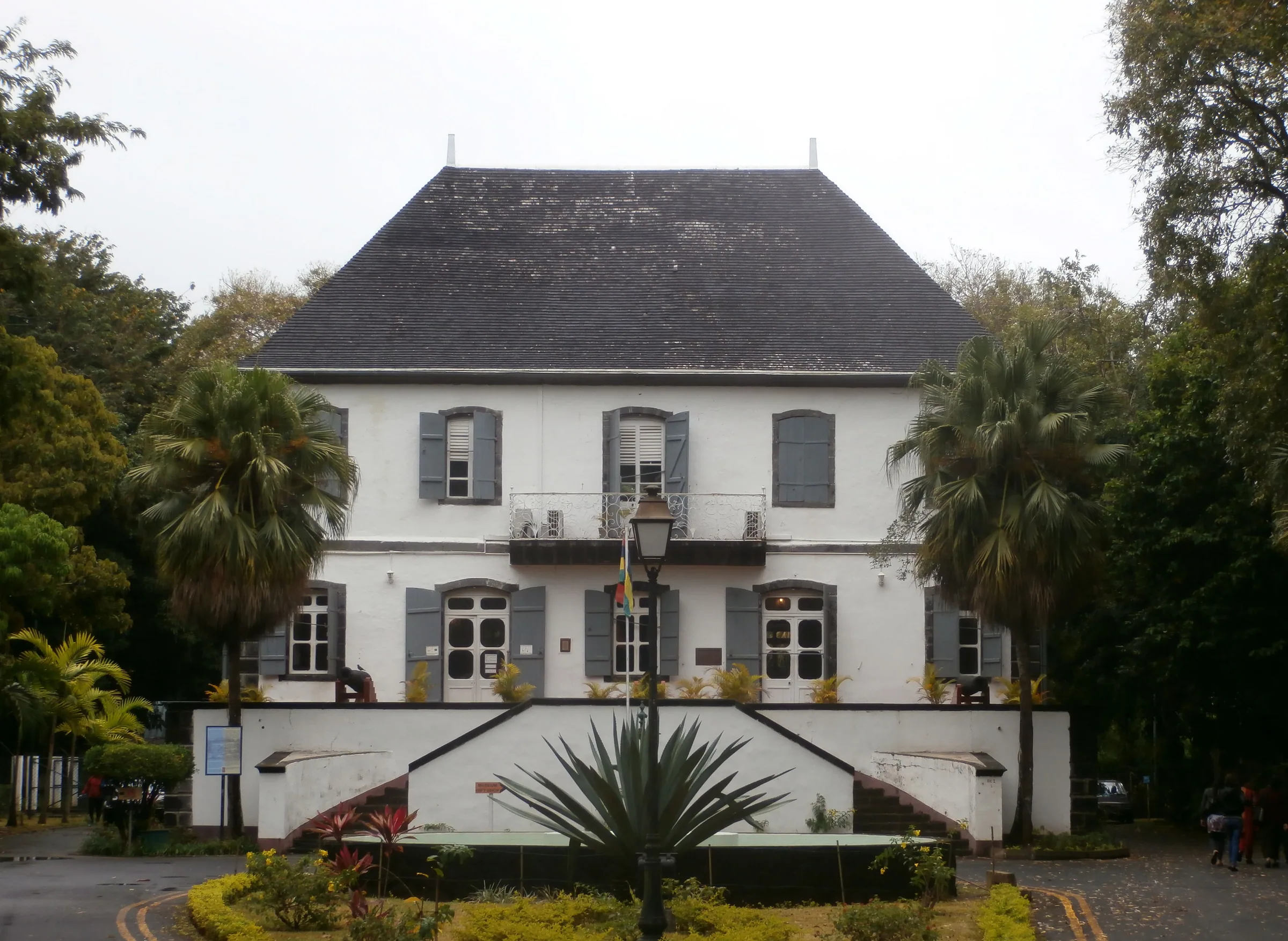
According to tradition both wounded men were nursed in the same house in Mahébourg, the Château Gheude, built around 1772 on the La Chaux river and today the National History Museum. The story is repeated in the town and on the museum’s own encyclopaedic page, where it carries a request for a citation, so this guide reports it as tradition rather than record.
Why it mattered
Grand Port is noted as the most significant defeat for the Royal Navy during the Napoleonic Wars. In a conflict the British navy dominated almost everywhere, a French squadron had destroyed or captured an entire British frigate force, and France celebrated accordingly. When the names of the empire’s battles were carved on the Arc de Triomphe in Paris, GRAND PORT went on the inner face of the northern pillar. It is the only clearly naval name among the 158 battles inscribed, and Duperré’s own name is carved on the western pillar. The statement that it is the only naval battle on the Arc is uncited in the encyclopaedic account, but it matches the inscription list, and this guide repeats it on that basis.
Strategically it changed very little. A British invasion force landed at the end of November and Isle de France was captured on 3 December 1810, barely three months after the battle. The Treaty of Paris of 30 May 1814 confirmed British possession, and the island stayed British until independence on 12 March 1968. The French victory in the lagoon was complete and brief, which is perhaps why it has been remembered so carefully on both sides.
What remains today
The most visible memorial is the obelisk at Pointe des Régates on the Mahébourg waterfront, erected on 30 December 1899 and looking straight across the bay to the lion. From the ridge of Lion Mountain you see the whole battlefield at once, the reef, the pass and the spread of shallow water where the frigates grounded, and the view makes more sense of the week than any plan on paper.
Île de la Passe is a national Ancient Monument. The French battery, later British works and Second World War structures survive, along with graffiti left by the garrisons and the graves of the dead. It is visited only by boat and appears from the summit as the small flat island at the reef pass to the south-east. The wreck of HMS Sirius lies on sand inside the lagoon and is a dive site. The ship is broken up, but cannons, anchor chain and timbers remain at depths down to about 25 m, and dive centres treat it as an advanced dive.
The National History Museum in Mahébourg holds objects salvaged from the wrecks, including items from Magicienne, together with the bell of the St Géran and the rest of the town’s maritime history. It has been closed for renovation since 15 December 2025 with no reopening date published, so check the Mauritius Museums Council’s site before planning a visit around it.
Questions people ask
Who won the Battle of Grand Port?
The French. Between 20 and 27 August 1810 a French squadron under Guy-Victor Duperré, reinforced at the end by Commodore Hamelin from Port Louis, destroyed or captured all four British frigates that attacked it inside the reef of Grand Port. Sirius and Magicienne grounded and were burned by their crews, Néréide surrendered after a close-range battering, and Iphigenia surrendered when Hamelin arrived.
Why is Grand Port on the Arc de Triomphe?
Because it was a complete French victory at sea in a war where those were rare, and France chose to commemorate it. GRAND PORT is carved on the inner face of the northern pillar of the Arc de Triomphe in Paris among 158 battle names, and it is the only clearly naval name among them. Duperré’s own name appears on the western pillar. The claim that it is the only naval battle on the Arc is widely repeated and matches the inscription list.
What happened at Île de la Passe?
A British landing party seized the French battery on the island at the reef pass on 13 August 1810 and flew a French flag to lure French ships in. On 20 August, as Duperré’s squadron approached, the false flag caught fire on a brazier while being lowered and ignited a stack of cartridges. Three men were killed, twelve badly burned, and the battery’s guns were disabled, so the French squadron passed into the lagoon.
Can you dive the wreck of HMS Sirius?
Yes. The frigate burned and blew up on 25 August 1810 and her remains lie on sand inside the lagoon of Grand Port at depths down to about 25 m. The ship is broken up, but cannons, anchor chain and timbers are still there. Local dive centres run it as an advanced dive because of the depth and conditions, so it is not a site for a first open-water dive.
Where is the Grand Port battle memorial?
At Pointe des Régates on the Mahébourg waterfront, where an obelisk was erected on 30 December 1899. It stands by the water with the bay in front of it and Lion Mountain across the lagoon, and it is a short walk from the bus station and the waterfront promenade. The National History Museum, which holds objects from the wrecks, is in the same town but has been closed for renovation since December 2025.
Is the Mahébourg Naval Museum open?
Not at the time of writing. The National History Museum in the Château Gheude has been temporarily closed for renovation works since 15 December 2025, and the Mauritius Museums Council had published no reopening date by October 2026. Its normal hours were 09:00 to 16:00 most days, with a late opening on Wednesday and mornings only on Sunday, and admission was free. Check the Council’s website before you go.
Can you see the battlefield from Lion Mountain?
Yes, all of it. From the summit block and the eastern viewpoint you look down on the lagoon of Grand Port, the reef, the pass at Île de la Passe to the south-east and the shallow water inside the reef where Sirius and Magicienne grounded. Mahébourg, where the memorial and the museum stand, is about 6 km away across the bay. It is the best place to understand why the reef decided the battle.
See where the wounded were nursed
The Naval Museum page covers the Gheude house in Mahébourg, what it holds and the renovation closure.