
The Dutch landing at Vieux Grand Port, 1598
In September 1598 a Dutch fleet on its way to the East Indies found a sheltered bay on the south-east coast of an uninhabited island and anchored under a long ridge shaped like a lion. The admiral named the bay after himself and the island after his prince. Forty years later the Dutch built a fort on the same shore, and its excavated walls now sit in the garden of a free museum a few hundred metres from the start of the Lion Mountain trail.
Read the guide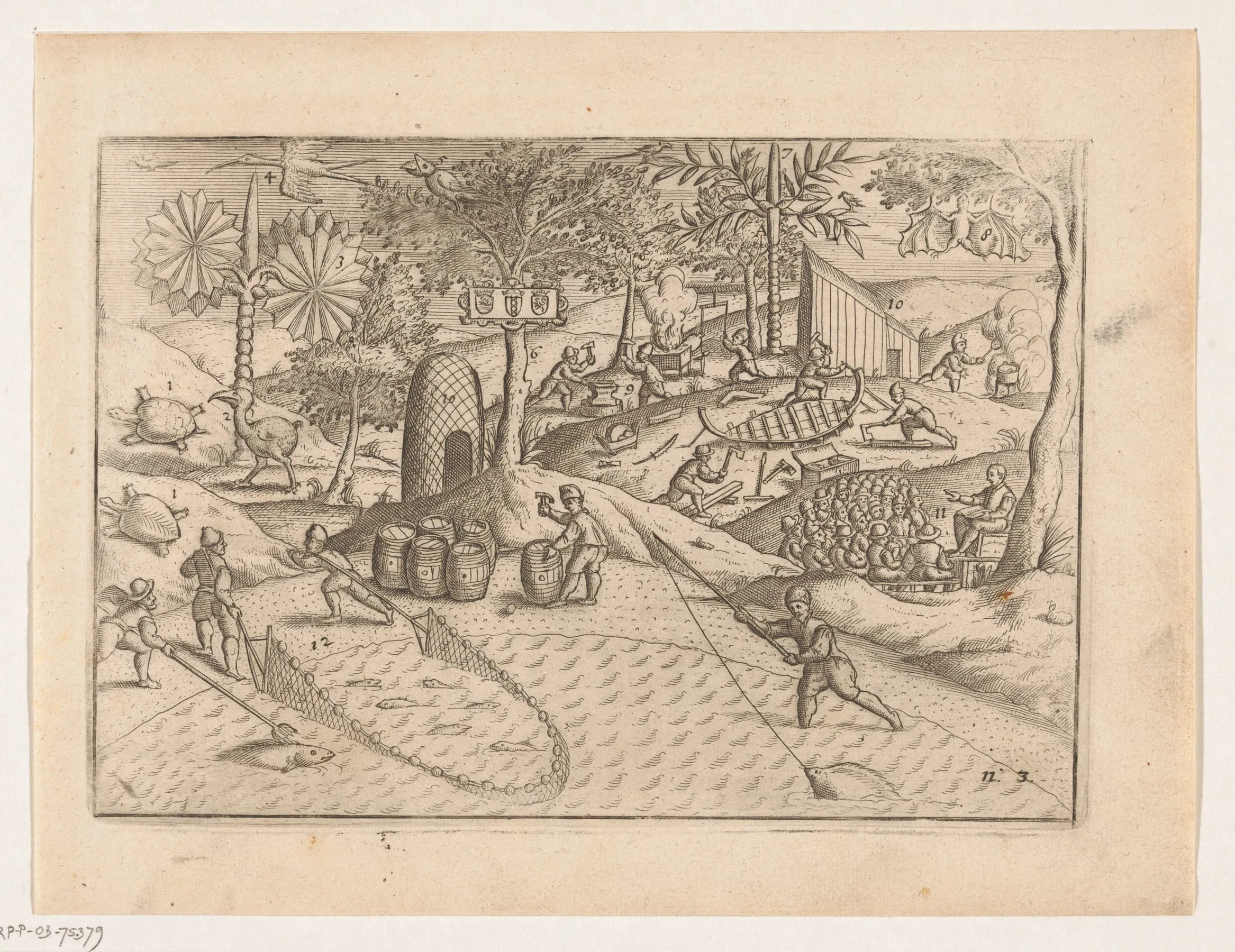
The second Dutch fleet finds a bay
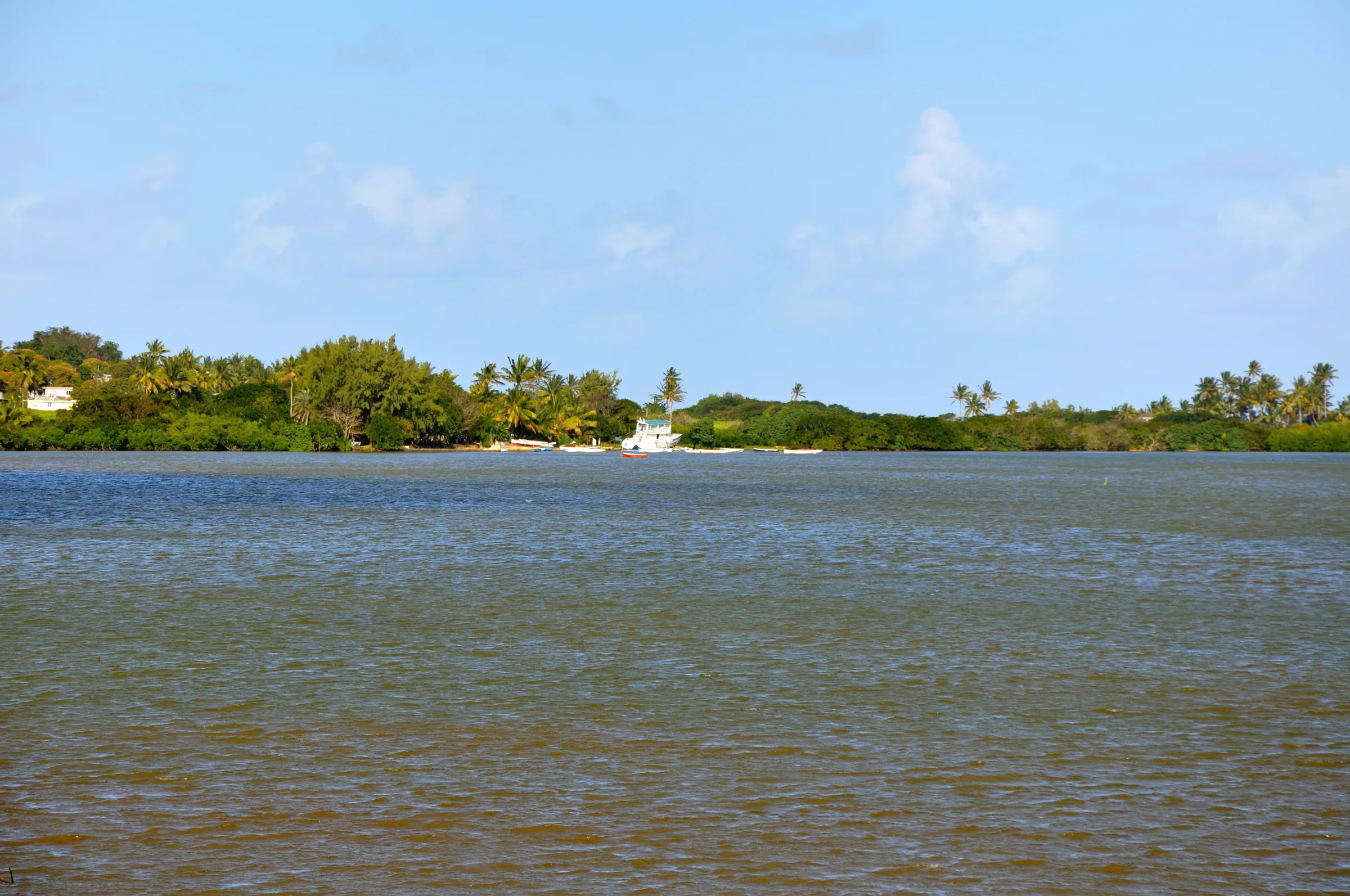
The Dutch Republic sent its second trading expedition to the East Indies in 1598 under Jacob Cornelisz van Neck and Wybrand van Warwijck. The ships under Van Warwijck’s command reached the island in September and, on or around 20 September, entered a sheltered bay on the south-east coast. A coral reef protects the bay from the ocean swell, a winding channel through the reef lets a ship in, and fresh water runs down from the ridge above, so for a fleet that had been at sea for months it was close to ideal.
The date is less fixed than the monuments suggest. The main encyclopaedic account gives 20 September for the entry into the bay, the same tradition has the island sighted on 17 September, and at least one source gives 18 September for the first landing. This guide says on or around 20 September 1598, which is also the date given for the landing monument in guidebooks and the one used for the 400th anniversary in 1998.
Naming the bay and the island
Van Warwijck named the anchorage Port de Warwick after himself. The island he named for Maurits van Nassau, the stadtholder who led the Dutch Republic, and it is the one Dutch name that has lasted. The French called the island Isle de France for their century, the British went back to Mauritius, and independent Mauritius has kept it. Port de Warwick did not survive. It became Grand Port under the French, and when the French moved their post across the bay to Mahébourg in 1806 the original shore became Vieux Grand Port, Old Grand Port.
Vieux Grand Port is described as the island’s first human settlement. At the foot of the mountain, beside the coast road, stands the Dutch First Landing memorial, a National Heritage Site that marks the spot and overlooks the bay. The trails into the Vallée de Ferney start just north of it off the B28, so hikers who approach the mountain from the Ferney side pass the memorial without necessarily noticing what it is.
Fort Frederik Hendrik, 1638
For forty years the Dutch used the bay as a stopping place for water, food and repairs without staying. That changed in 1638, when Cornelius Gooyer arrived with 25 men and founded the first permanent settlement. He built Fort Frederik Hendrik, named after Frederick Henry, Prince of Orange, on the colluvial deposits at the base of Lion Mountain, about 7 m above the shore where a small stream, later called the Fosse Hollandaise, crosses the site. The fort was a refreshment station for the Dutch East India Company, the VOC, where ships on the long passage to and from the East Indies could take on supplies.
A Mauritian newspaper account of the excavations dates the decision to build to 1637 and describes the fort as a four-pointed star of wooden palisades and earthen ramparts rather than stone. The encyclopaedic sources give 1638 for the foundation, and this guide uses 1638 for the settlement while noting the earlier date for the decision. Wood and earth were a poor choice on a cyclone coast, as the next sixty years would show.
Ebony, enslaved labour and the dodo
The Dutch did not come for the view. The island’s forests were full of ebony, a dense black timber worth a great deal in Europe, and under the commander Adriaan van der Stel the colony became an ebony-cutting station. Large areas of forest were felled. To do the felling, Van der Stel brought 105 enslaved people from Madagascar, with further shipments in 1644 and 1645. Some escaped into the interior.
The Dutch presence also finished the dodo. The flightless bird had no defence against hungry sailors or against the animals that came with them, including rats and the long-tailed macaques the Dutch probably introduced as pets around 1602, and the last confirmed sighting is commonly given as 1662, twenty-four years after Gooyer landed. The ebony forest that drew the Dutch has almost gone too. Less than 2 percent of the island’s indigenous forest survives, and the last dry coastal ebony forest stands on Île aux Aigrettes, in the lagoon in front of the fort.
Cyclones, fire and the retreat of 1710
The colony limped. The first occupation ended in 1658, when the Dutch withdrew. They returned in 1664 and tried again for almost half a century. A cyclone destroyed the wooden fort in 1695. In 1698 the commander, or opperhoofd, Deodati built a stone lodge beside the ruins, and that lodge is the one Dutch building whose wall archaeologists would later find. Cyclones, droughts, pests and illness kept coming, and in 1710 the Dutch gave up for good. On leaving they burned the settlement, leaving only the lodge standing. Five years later the French claimed the empty island.
Digging the fort out of the grass
The French built on top of the Dutch, which is why the fort survived at all. From 1753 a French government complex with a lodge, a prison, a bakery and a smithy went up directly on the Dutch ruins, and when the post moved to Mahébourg in 1806 the whole site went quiet under grass and cane for almost two centuries.
Archaeologists from Rutgers University and the University of Amsterdam excavated it at the end of the twentieth century and found the Dutch layers about 50 cm below the French structures, with the wall of Deodati’s 1698 lodge as the key find. The seasons are dated differently by different sources. The Mauritius Museums Council says work has continued since 1997, while a Mauritian newspaper counts five seasons, in 1999 and 2000 and from 2003 to 2005.
In 1998, for the 400th anniversary of the landing, the site was rehabilitated and landscaped and inaugurated by Prince Maurits van Oranje-Nassau. The Frederik Hendrik Museum opened on 27 May 1999 with a first exhibition donated by the Dutch government. One encyclopaedic article gives 2010 as the opening year, but the Museums Council, which runs the museum, gives 1999, and this guide follows the Council.
Visiting the museum and the landing memorial
The museum stands on Royal Road in Old Grand Port, the official address for Vieux Grand Port, on the landward side of the coast road at the foot of the mountain. The excavated foundations are in the grounds outside, so the site can be read even on a quick visit, and the displays inside cover the Dutch and French periods on the spot where they happened. Admission is free. The telephone number published by the Museums Council is (230) 634 4319, and the museum is closed on public holidays.
It makes a natural pairing with the hike. The Lion Mountain trail leaves the village behind the police station a few hundred metres away, so a morning on the mountain and an hour in the museum garden fit together without moving the car. The landing memorial is a short walk along the coast road, and the bay in front of it is the water Van Warwijck’s ships anchored in.
| Day | Hours |
|---|---|
| Monday, Tuesday, Thursday, Friday, Saturday | 09:00 to 16:00 |
| Wednesday | 11:00 to 16:00 |
| Sunday | 09:00 to 12:00 |
| Public holidays | Closed |
Questions people ask
When did the Dutch land in Mauritius?
In September 1598, at the bay of Grand Port below Lion Mountain. The most quoted date is 20 September, when Wybrand van Warwijck’s ships entered the bay, but the same tradition has the island sighted on 17 September and one source gives 18 September for the first landing. This guide says on or around 20 September 1598 and notes that the sources disagree by a few days.
Why is Mauritius called Mauritius?
The Dutch named the island after Maurits van Nassau, the stadtholder who led the Dutch Republic at the time of the 1598 expedition. The bay they anchored in was named Port de Warwick after the admiral, Wybrand van Warwijck. The island’s name survived the French period, when it was officially Isle de France, and was restored by the British and kept at independence.
Where exactly did the Dutch land?
At the bay of Grand Port on the south-east coast, on the shore now occupied by the village of Vieux Grand Port at the foot of Lion Mountain. The Dutch First Landing memorial beside the coast road marks the place and is a National Heritage Site. The fort the Dutch built forty years later stood a short distance along the same shore, where the Frederik Hendrik Museum now is.
What is the Frederik Hendrik Museum and why was it built?
It is a small free museum run by the Mauritius Museums Council on the site of Fort Frederik Hendrik, the Dutch fort of 1638, and the French buildings later raised on its ruins. It was created for the 400th anniversary of the Dutch landing, after excavations by Rutgers University and the University of Amsterdam, and opened on 27 May 1999 with an exhibition donated by the Dutch government.
Is the Frederik Hendrik Museum free?
Yes. The Mauritius Museums Council lists admission as free. Published hours are 09:00 to 16:00 on Monday, Tuesday, Thursday, Friday and Saturday, 11:00 to 16:00 on Wednesday and 09:00 to 12:00 on Sunday, closed on public holidays. The museum is on Royal Road, Old Grand Port, and its telephone number is (230) 634 4319. Check before you go.
Why did the Dutch abandon Mauritius?
Because the colony never paid its way and the climate kept breaking it. The first occupation ended in 1658, the Dutch returned in 1664, a cyclone destroyed the wooden fort in 1695, and droughts, pests and illness followed. In 1710 they left for good and burned the settlement, leaving only the stone lodge of 1698. The ebony was largely cut and the dodo was already gone.
Can you see the Dutch fort today?
You can see its excavated foundations in the grounds of the Frederik Hendrik Museum in Vieux Grand Port. The Dutch layers lie about 50 cm below the French structures of the 1750s, and the wall of the stone lodge of 1698 is the key Dutch find. Nothing stands to any height, because the Dutch burned the site in 1710 and the French built on top of it, but the plan of the place is readable.
Explore the village at the foot of the mountain
The Vieux Grand Port page covers the oldest settlement on the island, the museum and the trailhead in one place.