
Vallée de Ferney
Vallée de Ferney is the managed conservation valley on the inland side of Lion Mountain, a few minutes from Vieux Grand Port. It has marked trails, a nursery growing endemic trees, kestrels fed in front of visitors at midday and a restaurant looking over the bay. It is a different outing from the free, unmarked trail up the lion’s back, and this page explains how the two fit together.
Read the guide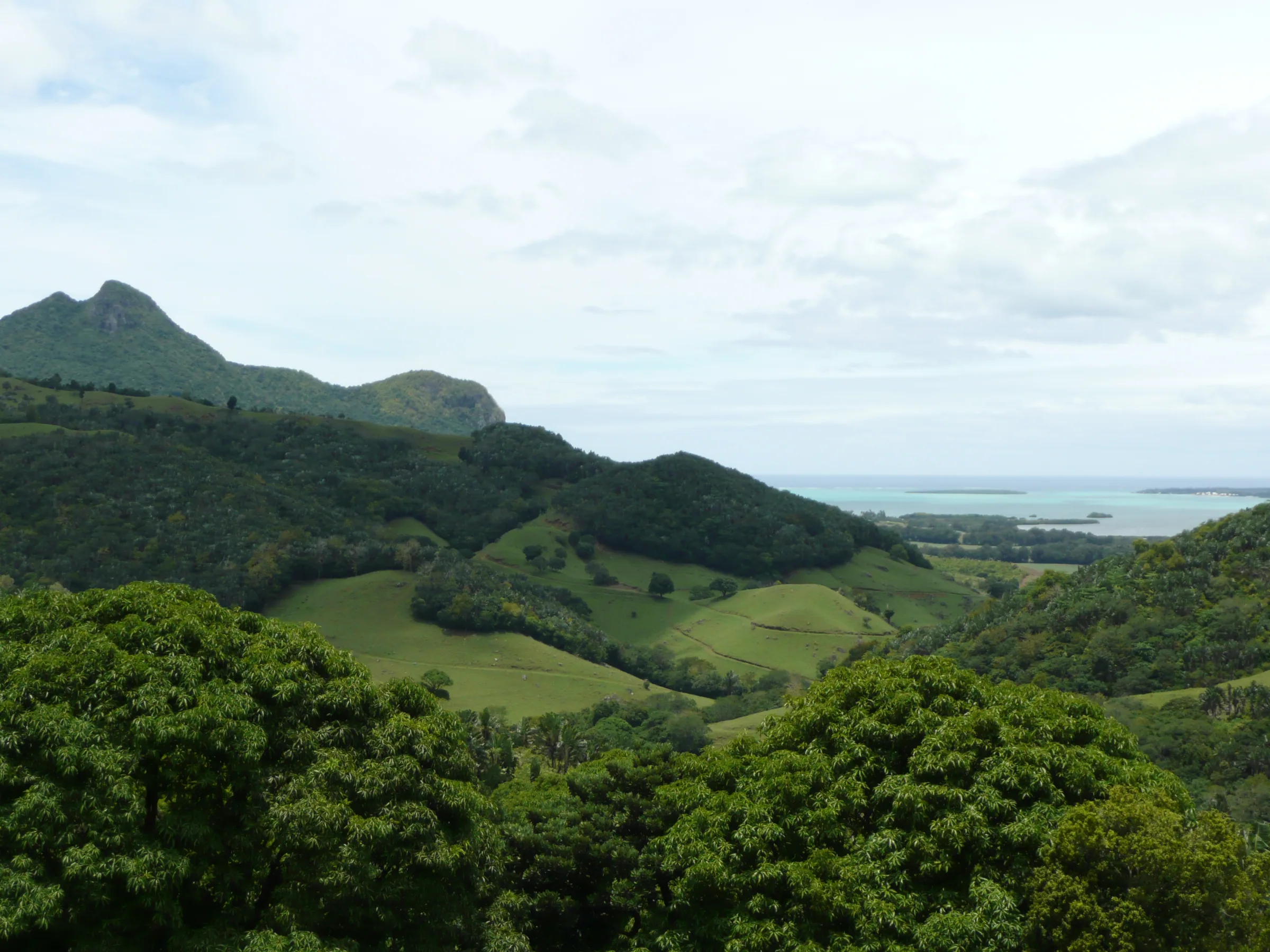
Two different outings on one mountain
Lion Mountain has two faces. On the coast side, the free trail from Vieux Grand Port climbs the lion’s back from the village street to the exposed head, with no gate, no fee, no opening hours and no official marking. On the inland side, the Vallée de Ferney is a private estate with a reception, published hours, a fee, four marked routes, a nursery and a restaurant. The two sit on opposite flanks of the same ridge and are reached from different turn-offs on the same coast road.
People mix them up because both appear in searches for Lion Mountain and because Ferney’s longer routes and its race courses do reach the ridge. If you want the summit climb described elsewhere on this site, go to Vieux Grand Port and start behind the police station. If you want easier, well-marked walking with a chance of seeing endemic birds, a look at the forest work and lunch with a view, go to Ferney. Doing both in one visit is possible but needs the Ferney hours in mind, because its activities finish early in the afternoon.
What the valley protects
The estate covers about 3,100 ha of hills and valley floor fringed by the Bambou range, which is how Ferney itself describes its setting. Inside it, a far smaller conservation zone holds the forest that matters. Sources disagree on its size. The La Vallée de Ferney Conservation Trust, set up in 2007, manages a zone of about 103 ha, while an earlier account describes a 200 ha reserve established in 2006 with the Mauritian Wildlife Foundation. The honest figure is a conservation zone of roughly 100 to 200 ha within a 3,100 ha estate. The park opened to visitors in 2008.
The forest is a remnant of the lowland and mid-slope forest that once covered this corner of the island, and Lonely Planet describes the project as protecting a 400-year-old forest. Less than 2 per cent of the indigenous forest of Mauritius survives anywhere, so a block of this size beside a mountain otherwise given over to cane and invasive guava is significant. Ferney lists ebony, bois clou and takamaka among its trees and protects Le Manglier Vert, Sideroxylon puberulum, a species found in very few places.
Work on the ground is slow and manual. Invasive plants have been cleared by hand from about 10 ha, over 30,000 endemic trees have been planted and around 11,000 more are growing in the nursery. A tortoise reserve and a deer population round out the estate, and fruit bats, the endangered Mauritian flying fox, fly over the valley.
The highway that was never built
The valley owes its present shape to a road that was not built. A highway was planned through it, and the surveys carried out ahead of construction found Bois Clou, Eugenia bojeri, along with other plants that botanists had thought extinct. The road was scrapped. The Conservation Trust was set up in 2007 and the park opened to visitors in 2008.
That history matters for a visitor in one practical way. The rarest plants are the reason the rules exist, so keep to the marked routes, take nothing from the forest and leave pets at home, which the estate asks of every visitor.
Kestrels at midday
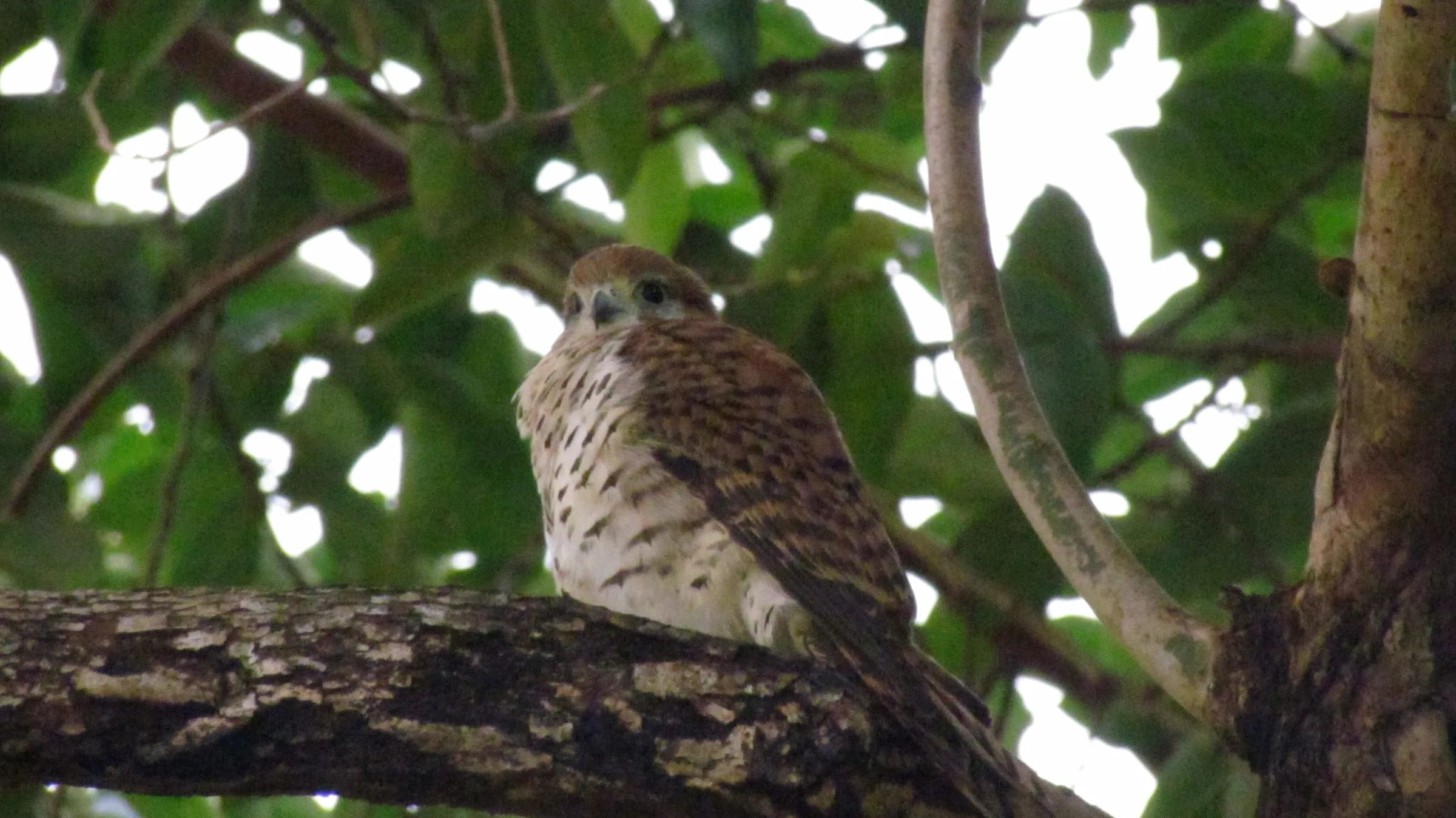
The Mauritius kestrel is the bird most visitors come for. It was down to four known wild birds in 1974 and was listed as critically endangered in 1985. Captive breeding and releases brought it back, and the valley was one of the release sites. Reintroductions at Ferney began in 1987, with releases from 1988 to 1993. The species was downgraded to vulnerable in 1994 and relisted as endangered in 2014.
Population figures vary. A 2019 estimate gave about 400 birds; the Mauritian Wildlife Foundation’s 2025 report puts the island-wide total at about 250 and notes that the eastern population may now be declining. In the valley, the Foundation maintained 27 nest boxes in the 2023 to 2024 season, when 19 breeding pairs fledged 23 chicks; another account counts 14 to 15 pairs. Whatever the exact number, this is the one place on the island where kestrels are fed every day in front of visitors.
Feeding happens at noon. Arrive by 11:30, ask at reception where to stand and keep your voice down. The birds are wild and do not always come, so treat the session as a good chance rather than a guarantee. Ferney has also released around 150 endemic birds over the years, including echo parakeets, pink pigeons, which breed in the valley, and paradise flycatchers, so keep looking up on the walk to the feeding point.
The four marked routes
Ferney publishes four hiking routes, graded by length and climb. The two shorter ones stay low and suit families and anyone who wants the forest without the mountain. The 13 km and 18 km routes climb seriously, and the estate describes the longest as difficult and technical. Independent recordings from Ferney show loops of about 8 km with roughly 260 m of climbing, and guidebook figures of 8.4 km and 3 to 4 hours for Lion Mountain probably describe a Ferney loop rather than the direct village route.
Activities run from 08:30 to 14:00, so start the long routes at opening time. The estate does not publish, on the page we read, which summits each route touches, so ask at reception if you have your heart set on the ridge. Shoes with grip matter here as much as on the village trail, because the same clay stays slippery long after rain.
| Route | Grade | Climb |
|---|---|---|
| 5 km | Easy | 75 m |
| 8 km | Easy | 178 m |
| 13 km | Medium | 530 m |
| 18 km | Difficult, technical | 970 m |
Hours, fees and how to get there
The valley is open seven days a week. Activities run from 08:30 to 14:00 and reception stays open until 17:00. Published rates at the time of writing are Rs 250 for resident adults and Rs 100 for resident children, Rs 500 for visiting adults and Rs 250 for visiting children. Check the estate’s own site before you go, because rates and hours change and this page is not the estate.
The turn-off is signposted on the coast road about 2 km south of Vieux Grand Port, close to the Dutch First Landing memorial at the foot of the mountain. Coming from Mahébourg, follow the coast road north and watch for the sign before you reach the village. There is a car park at the estate. A hiker on a Ferney loop reported finding it locked at 16:30 because it closes at 16:00, so do not plan a late descent to a car left inside. Pets are not allowed. The estate’s telephone number is +230 660 1937.
The Falaise Rouge restaurant sits above the valley with a view over the bay of Grand Port and across to Lion Mountain, serves lunch and is known for venison. A small lodge with four rooms lets you stay in the valley overnight. Both are mentioned here as facts about the site rather than as recommendations.
The Ferney Trail race
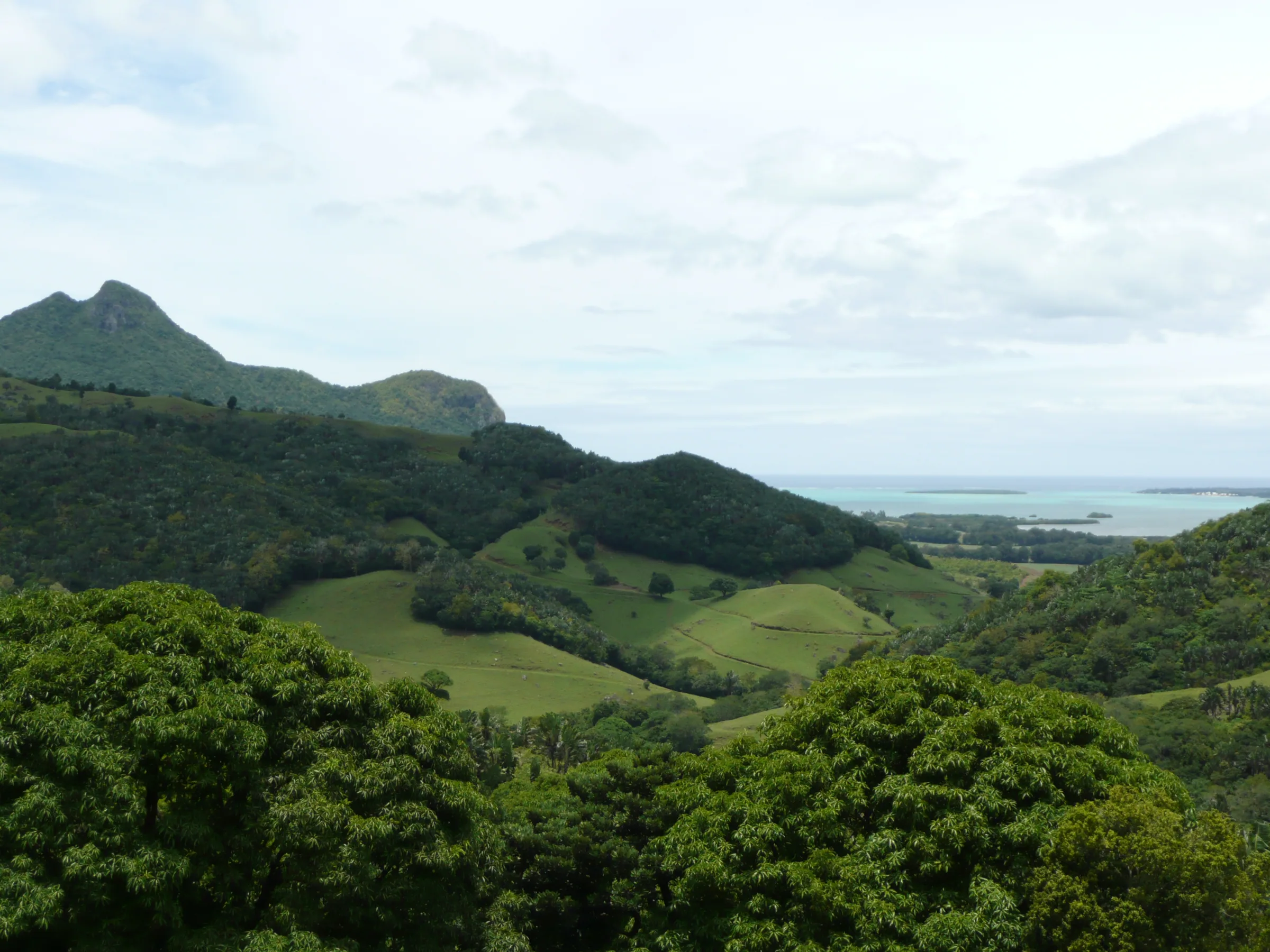
Once a year the valley becomes the start and finish of the Ferney Trail, a running event in the Association Rando Trail et Nature league whose organisers say it draws over 4,500 participants. The 2026 edition was scheduled for 12 September with four distances, 5 km with 54 m of climb, 10 km with 400 m, 18 km with 600 m and 35 km with 1,500 m. Minimum ages run from 6 to 18 depending on the distance.
Earlier editions were longer and wilder. The 2018 course ran 50.1 km with 2,530 m of climbing and the 2019 course 38.3 km with 1,980 m, and both climbed Lion Mountain at sunrise, which remains the only organised dawn ascent of the mountain this guide has found. If you are a runner, the trail running page on this site covers the mountain itself. If you are a walker, avoid race day, when the valley is given over to the event.
Questions people ask
Is Vallée de Ferney the same as the Lion Mountain hike?
No. The Lion Mountain hike described on this site starts in Vieux Grand Port, on the coast side of the ridge, and is free and unmarked. Vallée de Ferney is a private conservation estate on the inland side with a reception, fees, opening hours and four marked routes. Its longer routes climb towards the ridge and its race has used the summit, but the two are managed separately and reached from different turn-offs.
How much does Vallée de Ferney cost?
At the time of writing the estate publishes Rs 500 for visiting adults and Rs 250 for visiting children, with resident rates of Rs 250 and Rs 100. Rates change, so check the estate’s own site before you travel. The trail from Vieux Grand Port on the other side of the mountain has no fee at all.
Will I see a Mauritius kestrel?
Your best chance is the daily feeding at noon, which is the only one of its kind on the island. Arrive by 11:30. The birds are wild, numbers in the east may be falling and nobody can promise a sighting, so treat it as likely rather than certain. Kestrels have also been seen on Lion Mountain itself and at the valley viewpoints.
Can I bring my dog?
No. The estate does not allow domestic pets in the valley, where the birds it protects were brought back from the edge of extinction. No rule has been published for the approach from Vieux Grand Port, but the same reasoning applies on a mountain where kestrels hunt and the forest is recovering.
Can I climb Lion Mountain from Vallée de Ferney?
Hikers do record loops from the valley of roughly 8 km with about 260 m of climbing, and the estate’s 13 km and 18 km routes climb seriously. The estate does not publish which summits each route reaches, so ask at reception. Remember that activities finish at 14:00 and that the car park has been reported locked after 16:00.
What time does Vallée de Ferney close?
Activities run from 08:30 to 14:00 and reception stays open until 17:00, seven days a week. One hiker found the car park locked at 16:30 because it shuts at 16:00. If you are walking a long route, start at opening time and keep the afternoon free rather than planning a late finish.
See what lives on the mountain
The nature page covers the dry forest remnants, the invasive guava, the kestrels and the lagoon’s reserve islands.