
Trail running on Lion Mountain
Lion Mountain is a hill rep with a scramble on top, not a trail-running route. The cane road and the lower forest can be run, the root gully is a power hike, and the ridge and the lion’s head are places where running makes no sense at all. This page treats the mountain honestly as a running objective, explains the CIEL Ferney Trail race that uses the neighbouring valley, and covers the heat, the hydration, the slippery descents and the etiquette that keep runners and walkers on good terms.
Read the guide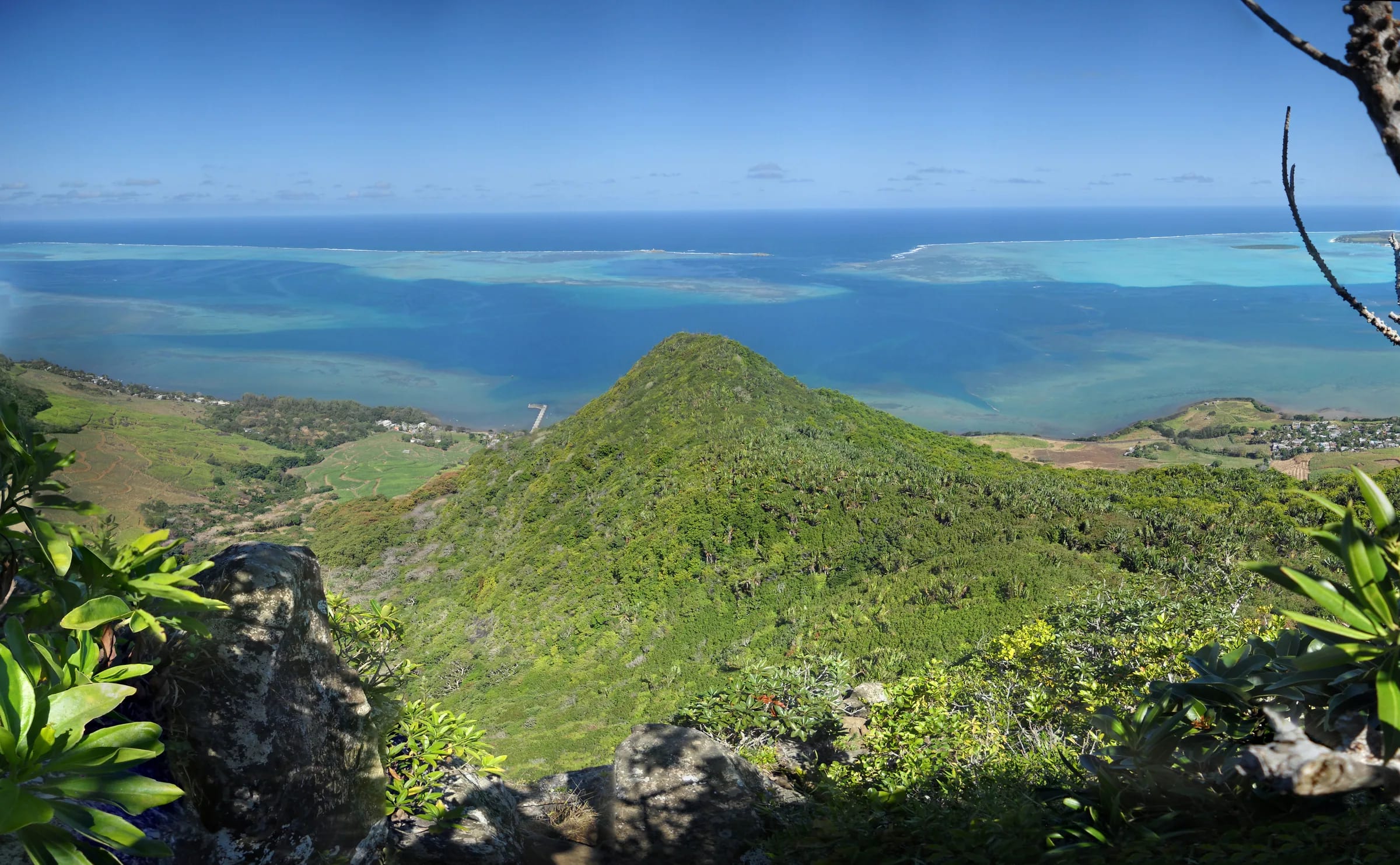
What kind of objective this is
The mapped spine from Vieux Grand Port to the summit is about 1.8 km with roughly 400 m of ascent, which works out to an average gradient of more than one in five and far steeper on the gully and the ridge. Recorded loops that add the eastern ridge come to between about 4.5 and 4.8 km with 470 to 550 m of climbing, depending on the device and the exact line. That is a short, hard effort, and most runners who come here treat it as a steep climb session with a technical descent rather than a run in the normal sense.
The ground changes character four times. The cane road is a flat vehicle track. The lower forest is rooty and shaded. The gully is a staircase. The ridge is rock with hands-on steps and real exposure on the seaward side of the head. Reviewers estimate that all four limbs are in use for roughly half of the ascent and descent, which tells you how much of this mountain is simply not running terrain.
Where you can run and where you cannot
Be clear in advance about which sections you will run and which you will walk, and do not let a watch or a group decide for you on the ridge.
The cane road
Flat, wide and open. Run it, but find the right track. The path leaves the coast road behind the police station, takes Adrien Street into the cane after about 100 m and follows the main cane road towards the middle of the mountain. Where the road bends right, the footpath goes straight on to a large boulder.
The lower forest and the gully
A steep, root-filled drainage climbs from the boulder to the ridge. This is a power hike with hands on roots, not a run. Keep the effort steady and the feet deliberate, because a stone kicked loose here lands on whoever is below.
The ridge
Rock steps that need both hands, a narrowing path and a drop on the seaward side. Nobody runs this and nobody should. Walk it, and if it is wet or windy, turn around at the viewpoint before the head.
The head
The most exposed part of the mountain. Walk on, stop, look, and walk off. Treat the summit as a place to stand still.
The descent
The eastern ridge drops a rocky spine to grassland before rejoining the cane road. Reviewers find this descent harder than the main spine and advise going counter-clockwise so that the easier line is used downhill. Running resumes only when you are back on the cane.
The CIEL Ferney Trail
The race that belongs to this corner of the island is the CIEL Ferney Trail, run from the Vallée de Ferney estate on the mountain’s northern side. The organiser’s page, read in late October 2026, still listed 12 September 2026 as the next edition, with registration through roag.org from 4 May 2026, so check the page for the following date before you plan a trip around it. The organiser claims over 4,500 participants every year across four distances.
The published page describes the four current courses without any mention of Lion Mountain or a sunrise section. Earlier editions were a different animal. The 2018 ultra ran about 50 km with roughly 2,530 m of climbing and the 2019 ultra about 38 km with roughly 1,980 m, and those long courses were described as crossing Lion Mountain at sunrise. If you want the experience of racing over the lion, that history is the reason people talk about it, but check the current course map before assuming the race still does.
| Race | Distance and climb | Start | Minimum age | League |
|---|---|---|---|---|
| Fun run | 5 km, 54 m | 09:30 | 6 | Not part of the league |
| Short | 10 km, about 400 m | 08:00 | 12 | Association Rando Trail et Nature, short |
| Long | 18 km, about 600 m | 06:30 | 16 | Association Rando Trail et Nature, long |
| Ultra | 35 km, about 1,500 m | 06:00 | 18 | Association Rando Trail et Nature, long |
The Association Rando Trail et Nature league
The 10 km, 18 km and 35 km races count towards the League Trail run by the Association Rando Trail et Nature, the body behind the island’s trail league. The 10 km is classed as a short league race and the 18 km and 35 km as long ones. For a visiting runner the league matters less than the fact that it exists, because it means the island has a season of marked, marshalled trail races, which is precisely what Lion Mountain on an ordinary morning does not have. If you want to race in Mauritius, the league calendar is where to look, and Ferney is the event nearest this mountain.
Heat and hydration
Runners underestimate this mountain because it is short. The upper half has no shade, the dark rock radiates heat, and there is no water anywhere on the route. The airport station at Plaisance, a few kilometres away, records average daytime highs of about 30 °C from December to March and about 25 °C in July and August, and the humidity on the coast makes both feel hotter. Trade winds are strongest in July and August, which cools the ridge but also unbalances you on the rock.
Carry at least 1.5 litres even for a fast outing, and more in summer. A running vest with soft flasks keeps the hands free for the scramble in a way that handheld bottles do not. Start at first light, which is between about 05:22 in November and 06:45 in July, and aim to be off the ridge before the sun is high. If you are training for a race, do the climb repeats on the cane road and the lower forest in the early morning and leave the ridge for one careful ascent.
Descending on slippery leaves
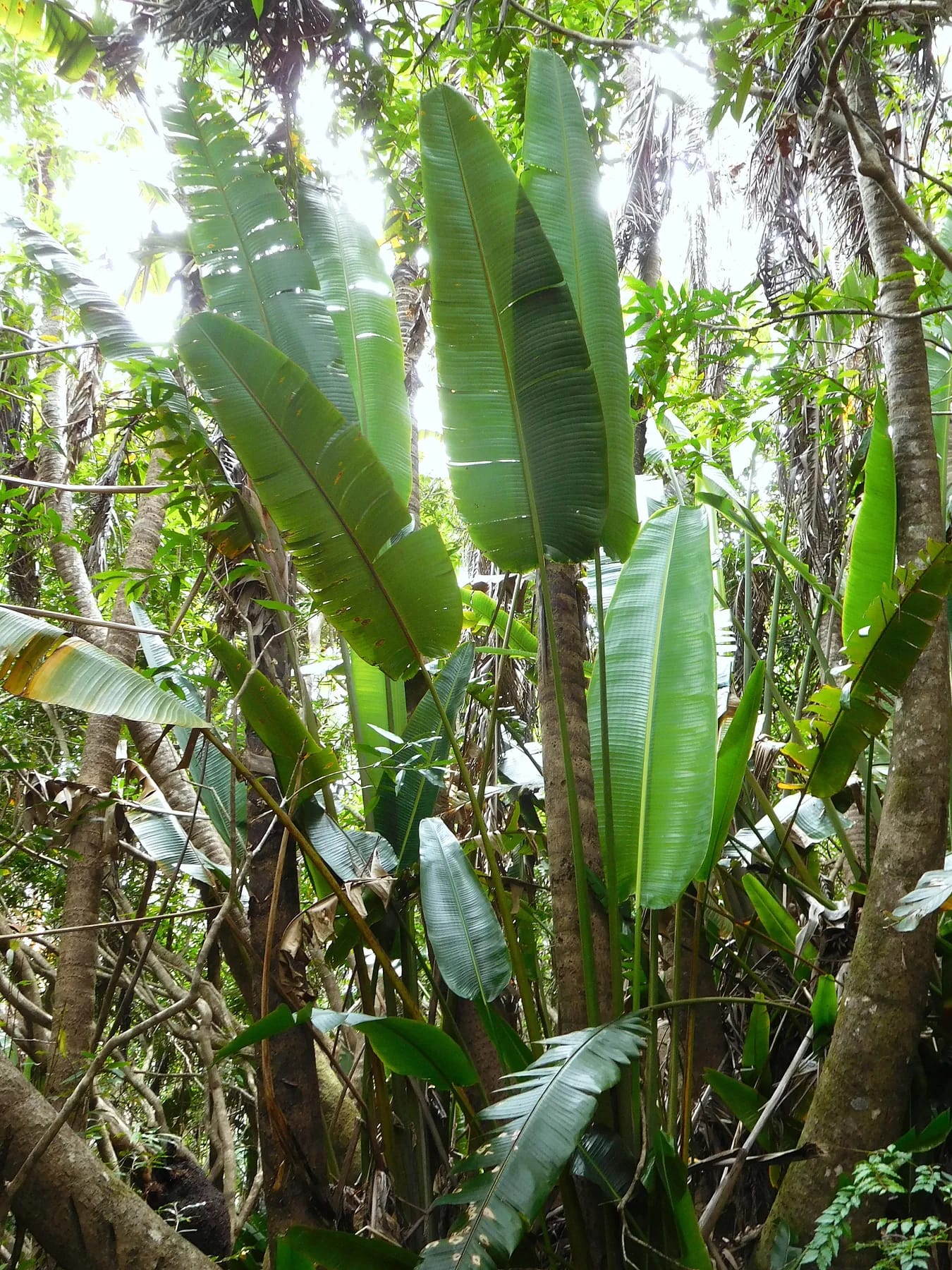
The descent is where runners get hurt on this mountain. The forest floor is covered in dry leaves that slide on the clay beneath, the clay itself stays greasy long after rain, and the holds on the rock steps are polished by thousands of hands and feet. Reviewers single out slippery leaves, mud and fog as the conditions that caught them out, and the eastern ridge descent as harder than the main spine.
Shorten your stride, keep your weight over your feet and accept that the first running steps come on the cane road, not in the forest. Shoes with deep lugs make the difference between a controlled descent and a slide. If there has been rain in the past day, treat the forest as a walk and the rock as off limits, and remember that fog can sit on the ridge even when the coast is clear.
Etiquette with walkers
The path is narrow, the rock steps are single file, and the people on them are often nervous. A runner arriving fast and silent behind someone on an exposed step is a genuine hazard, not an annoyance. Call out early and calmly, wait at the top or bottom of a step rather than passing on it, and let the slower person choose the moment. In the gully, be aware that your footfall above someone can send a stone onto them.
- Announce yourself well before you reach a walker, and pass only where the path is wide.
- Never pass on the rock steps or the head. Wait, and thank people for stepping aside.
- Do not dislodge rocks in the gully, and shout a warning if you do.
- Leave the music at home. The ridge is quiet and the view is the point.
- In the village, remember that an early start means residents are still asleep. Keep voices down and park considerately.
Running the valley instead
For actual running rather than a climb session, the Vallée de Ferney next door has four marked routes of 5 km, 8 km, 13 km and 18 km with 75 m, 178 m, 530 m and 970 m of climbing respectively, graded from easy to difficult. They are forest trails on the mountain’s northern side, usable within park hours, which run from 08:30 to 14:00 for activities with the reception open to 17:00, for a fee of Rs 500 per adult visitor and Rs 250 per child, less for residents. The car park has reportedly been locked after 16:00, so do not plan a late finish.
Ferney is where the race runs, and for a visiting runner it is the better place to log distance, with Lion Mountain kept for the one steep morning that the legs will remember. The Ferney page on this site has the detail on the valley.
Questions people ask
Can you run up Lion Mountain?
Only the lower part. The cane road from Vieux Grand Port is flat and runnable and the lower forest can be run by strong runners, but the root gully is a power hike and the ridge and lion’s head are hands-on rock with real exposure where running is unsafe and pointless. Treat the mountain as a steep climb session with a technical descent rather than a running route.
How fast can Lion Mountain be done?
Fast, experienced hikers complete the return trip from the village in about two and a half hours, against three to four hours for most people. Published running times for the summit are not reliable because recorded tracks differ in start point and line. Whatever your pace on the cane, the ridge sections will be walked, so the gains to be made are in the forest and on the descent to the cane road.
Does the Ferney Trail cross Lion Mountain?
The current published courses of 5, 10, 18 and 35 km are described by the organiser without any mention of Lion Mountain or a sunrise crossing. Earlier ultra editions, around 50 km in 2018 and 38 km in 2019, were described as climbing Lion Mountain at sunrise. Check the current course map on the organiser’s page before assuming the race still goes over the lion.
When is the next CIEL Ferney Trail?
At the time of writing, late October 2026, the organiser’s page still gave 12 September 2026 as the next edition, with registration opening on 4 May 2026 through roag.org. That date has passed, so the following edition had not yet been announced. Check the Ferney Trail page directly for the new date and the start times, which in 2026 ranged from 06:00 for the 35 km to 09:30 for the 5 km.
Can I run the Vallée de Ferney trails outside the race?
Yes, within park hours and for the entrance fee. Ferney has four marked routes of 5, 8, 13 and 18 km with 75 to 970 m of climbing, open seven days with activities from 08:30 to 14:00 and reception until 17:00. Visitors pay Rs 500 per adult and Rs 250 per child, residents less. The car park has reportedly been locked after 16:00, so finish early.
What shoes do I need for Lion Mountain?
Trail shoes with deep lugs. The forest floor is dry leaves over clay that slides when dry and smears when wet, the rock steps are polished, and the eastern descent is rocky. Road shoes are a bad idea here even for the cane road, because you will want the same shoes for the forest and the ridge. Lace them firmly before the boulder.
Know the ridge before you race it
The difficulty page judges the scrambles and the exposure honestly for different hikers.