
What to bring for Lion Mountain
Lion Mountain is a three to four hour outing, not an expedition, and the kit list is short. It is also strict, because the climb has no water, no shade on its upper half and a scramble at the top where a heavy or badly packed bag becomes a problem. This page lists what to carry, what to add for a dawn start, what to leave behind and how the list shifts with the seasons on the south-east coast.
Read the guide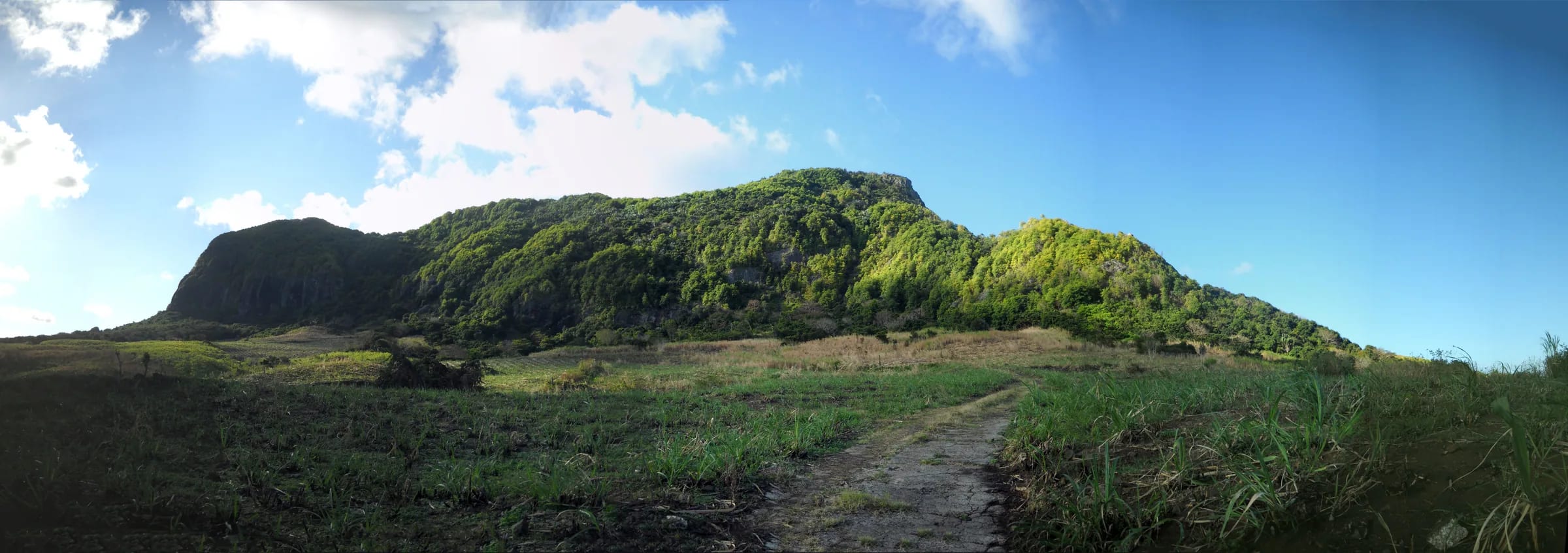
Why the list is short but strict
The whole climb is about 1.8 km each way with roughly 400 m of ascent. On paper that is a morning walk. In practice the second half is in full sun on dark rock, there is nowhere to refill a bottle, mosquitoes wait in the forest at the bottom, and the final rock steps onto the lion’s head need both hands. Every item you carry has to justify itself against those four facts.
The trap is to pack as if for a long hike. A big rucksack catches on branches in the root gully and shifts your balance on the exposed steps. A small daypack with the weight low and the straps tight is the right tool. Keep your hands free. Anything you would normally carry in a hand, from a water bottle to a camera, should be in or on the pack by the time you reach the ridge.
The essentials
These items belong in every pack on every day of the year. None of them is exotic, and the people who have a bad morning on this mountain are almost always missing one of the first two.
- Water, 1.5 to 2 litres per person. Sources consistently advise at least 1.5 litres, and in summer two is the honest figure. There is no water on the route and nothing to buy above the village.
- Shoes with real grip. Trail shoes or light boots with a lugged sole, laced firmly. The clay stays slippery long after rain and dry leaves slide on the descent. Sandals and smooth-soled trainers are the commonest cause of a bad morning here.
- Sun protection. A hat that stays on in the trade wind, sunscreen applied before you start and sunglasses for the glare off the lagoon. The upper half of the climb has no shade at all.
- Insect repellent. Reviewers mention mosquitoes again and again, particularly in the forest at the foot of the mountain and around the cane. Apply it in the village, not on the ridge.
- A light rain layer. Showers arrive on the south-east coast with little warning, and a thin waterproof weighs almost nothing. It doubles as a windbreak on the exposed ridge.
- A phone with the offline map and GPX file loaded, fully charged, in a pocket you can reach with one hand. Mobile data on the ridge is not something to rely on.
- A small first aid kit. Plasters for blisters, a bandage, antiseptic wipes and any personal medication. Grazes from the rock are the most likely injury.
- Cash in rupees for the village. A small shop sits on the main road a few steps from the start, and a cold drink after the descent is a fine tradition. Do not expect card payments.
- Something to eat. A banana, a few biscuits or a sandwich for the summit. You will be out for three to four hours and the climb is steep.
For a dawn start
If you plan to be on the summit for first light, add a headlamp with fresh batteries, and a spare for the group, because the cane road and the root gully are genuinely dark. Sunrise in Mauritius ranges from about 05:22 in November to about 06:45 in July, so a dawn start means leaving the village well before five in summer and around five in winter. Mornings on the ridge can be cool and windy in winter even when the day will be hot, so a long-sleeved layer that you take off on the way down is worth its weight.
Carry the phone with the map even if you have done the route before. The cane tracks look identical in the dark, and the beam of a headlamp picks out every path except the one you want. The sunrise page on this site has the full month-by-month timings.
Shoes, hands and the rock
Reviewers estimate that you use all four limbs for roughly half of the ascent and descent, and the rock steps before the head are polished where thousands of hands have used the same holds. Thin gloves are optional and some people like them, but clean dry hands grip basalt better than most gloves do. What matters more is that your hands are free, which means no bottle, no camera on a strap swinging into the rock and no trekking poles in your hands on the scramble.
Poles are useful on the steep earthy descent through the forest if you are used to them, but they must be folded and stowed before the ridge. A pack with a side pocket or straps for them solves this. Choose shoes you can trust on wet clay and on dry, leaf-covered slope, which are two different problems, and lace them before the first rock step rather than halfway up it.
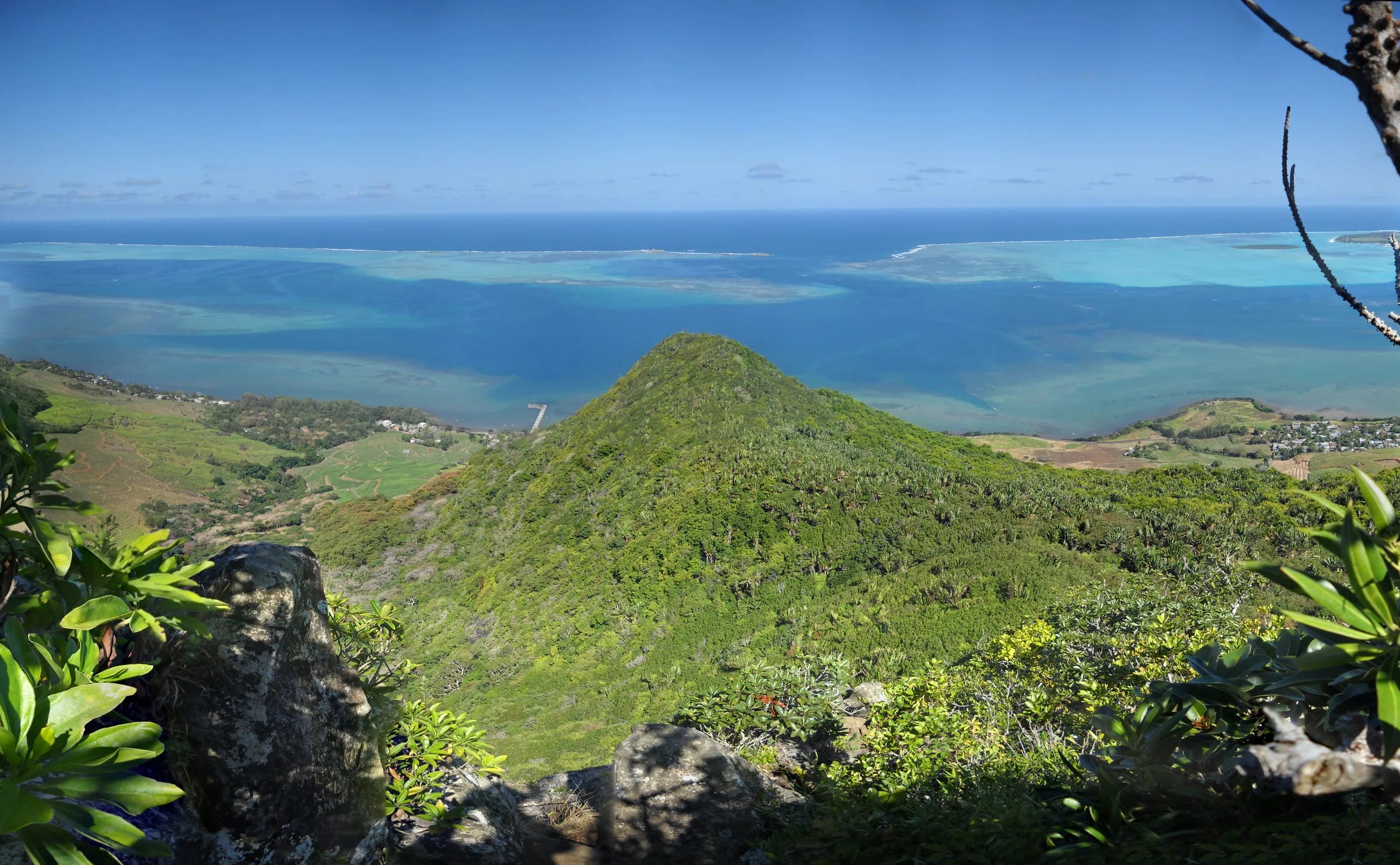
What to leave behind
The lighter you are on the rock, the safer you are. If you would not want to carry it in your hands up a steep staircase, think twice about bringing it up the lion.
- A large rucksack. It unbalances you on the exposed steps and catches in the root gully.
- Sandals, flip-flops and fashion trainers with smooth soles.
- Valuables you do not need. Leave passports and spare cards at your accommodation, not in the car in the village.
- A drone. The summit is about 9 km from the international airport, inside its controlled airspace, and leisure flights near the airport and over areas open to the public are not permitted. The drone page explains the rules.
- Speakers. The ridge is quiet and the people around you came for that.
- Anything that would be a disaster to drop. The seaward side of the head is a long way down.
Season by season, what changes
Mauritius has two broad seasons rather than four, and the south-east coast feels both of them more sharply than the sheltered west. The airport station at Plaisance, a few kilometres from the mountain, records average highs of about 30 °C from December to March and about 25 °C in July and August, with monthly rainfall falling from around 250 mm in January and February to under 50 mm in October. The trade wind is strongest in July and August and can be unpleasant on the exposed ridge.
| Period | What to expect on the mountain | What changes in the pack |
|---|---|---|
| November to April, summer | Hot and humid, daytime highs around 30 °C, thunderstorms most likely from December to April, cyclone season with the official warning window to mid May | Two litres of water each, an earlier start, a hat that covers the neck, and a check of the cyclone bulletin before leaving |
| January to March, the wettest months | Over 230 mm of rain a month at Plaisance and far more on the eastern uplands, clay that stays slippery for days | The rain layer is not optional, a spare dry top for the summit, and a readiness to turn around if the rock is wet |
| June to September, winter | Cooler, highs around 25 °C and nights down to about 19 °C on the coast, strong south-east trade winds in July and August, short days with sunset before 18:00 | A windproof layer for the ridge, a headlamp if there is any chance of finishing late, and still 1.5 litres of water |
| October, the driest month | Under 50 mm of rain at Plaisance, warm days, long enough daylight, often the most reliable conditions of the year | The standard list, with extra attention to sun protection as the heat returns |
A quick check before you leave the car
Run through the pack once in the village, where forgetting something costs a minute rather than a morning.
Water
At least 1.5 litres per person, two in summer, and a mouthful before you start.
Feet
Laced shoes with grip, socks that will not slide, and blister plasters within reach.
Sun and insects
Sunscreen and repellent applied, hat and sunglasses on or in the lid pocket.
Navigation
GPX loaded, phone charged and in a reachable pocket, screen brightness set for sunlight.
Weather
A last look at the south-east forecast, and at the cyclone bulletin during the warning season.
Car
Nothing visible inside, windows closed, keys somewhere you will not lose them on the scramble.
Questions people ask
How much water do I need for Lion Mountain?
At least 1.5 litres per person, and 2 litres in the summer months from November to April. There is no water on the route and nothing to buy above the village. The climb is steep and the upper half is in full sun, so you will drink more than the distance suggests. Drink before you set off and keep the bottle somewhere you will actually reach for it on the ridge.
Can I hike Lion Mountain in trainers?
Only if they have a proper lugged sole. Running shoes with smooth soles, fashion trainers and sandals are a poor choice here because the clay stays slippery long after rain and dry leaves slide underfoot on the descent. Trail-running shoes or light hiking boots with real grip are the right tool. Reviewers who struggled almost always mention footwear.
Do I need trekking poles on Lion Mountain?
They are optional and useful only on the steep earthy section through the forest. On the ridge and the rock steps before the head you need both hands free, so poles must be folded and stowed on the pack before you reach the crest. If you do not normally hike with poles, this is not the mountain to start.
Is there anywhere to buy water near the trailhead?
There is a small shop on the main road in Vieux Grand Port, a few steps from where the path leaves the police station, and shops line the coast road through the village. Buy before you start, carry cash in rupees and do not count on card payments. Above the village there is nothing at all.
Should I bring a rain jacket in winter?
Yes, and in summer too. The south-east coast catches showers off the trade wind at any time of year, and in July and August the wind on the exposed ridge is strong enough that a thin shell makes a real difference to comfort. A light waterproof weighs very little and is the single most useful extra layer on this mountain.
What about mosquitoes and insects?
Mosquitoes are mentioned by reviewers repeatedly, mostly in the forest at the foot of the mountain and around the cane fields, and especially after rain. Apply repellent in the village before you start and carry it for the descent. Long trousers help in the forest but are hot on the ridge, so most people settle for repellent and light shorts or trousers that dry quickly.
Check the season before you pack
The weather page explains the trade winds, the rain on the south-east coast and the months that work best for the climb.