
Mahébourg Naval Museum
The Mahébourg Naval Museum, officially the National History Museum of Mauritius, occupies a house of about 1772 on the La Chaux river where, according to tradition, the wounded commanders of both sides were nursed after the Battle of Grand Port. It has been closed for renovation since 15 December 2025 and no reopening date has been announced. This page tells you what is inside, when it normally opens and what to do in the meantime.
Read the guide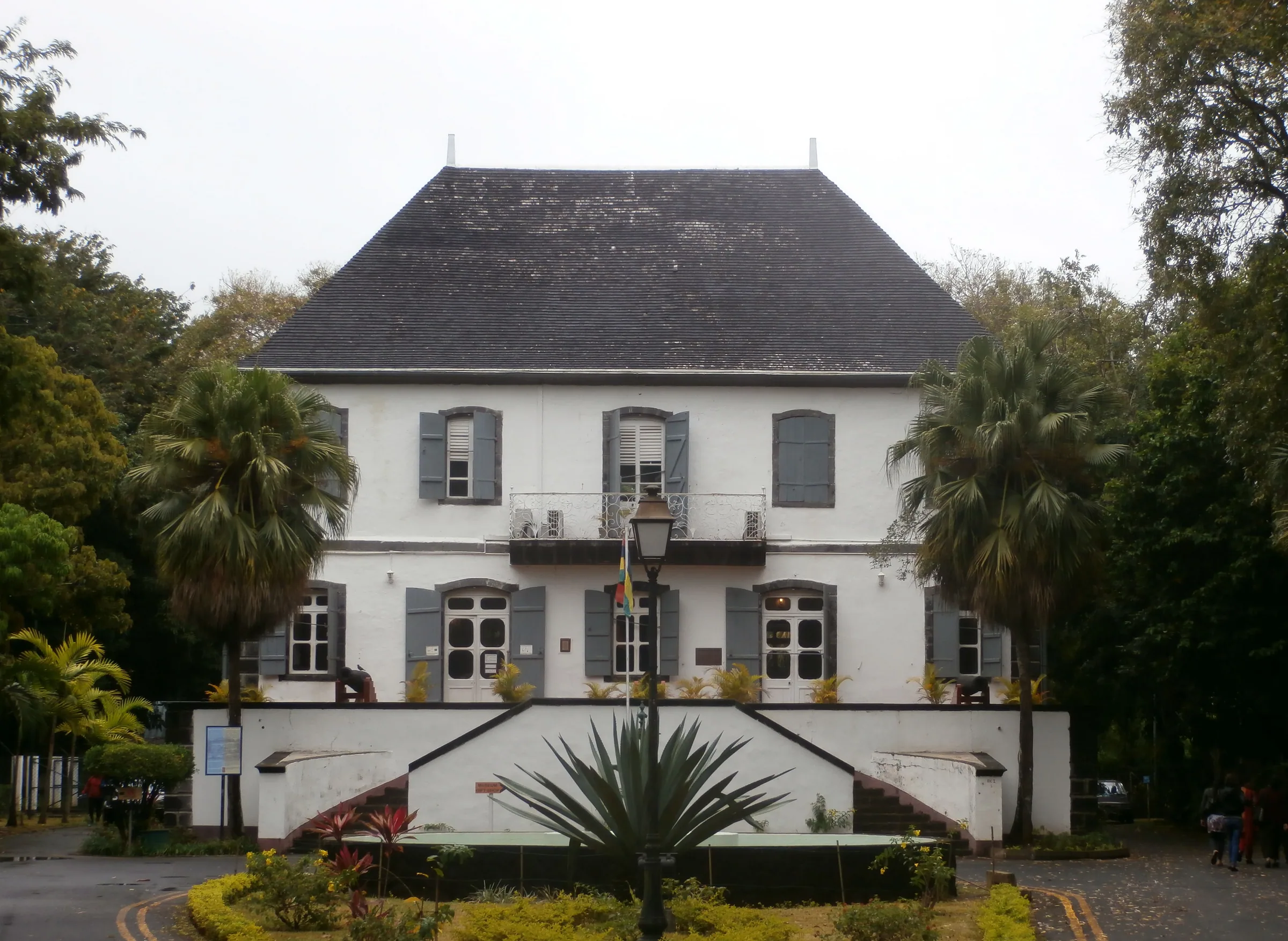
Closed for renovation since 15 December 2025
The Mauritius Museums Council, which runs the museum, states that it is temporarily closed for renovation works from 15 December 2025. As of late October 2026 no reopening date has been published. Renovating a house of this age is slow work, and the council has not said whether any of the collection will be shown elsewhere in the meantime, so do not build a day around the museum until you have confirmed that it is open.
The quickest check is the council’s own page for the museum or a telephone call to (230) 631 9329. If you arrive and find the gates shut, the Frederik Hendrik Museum at Vieux Grand Port, around the head of the bay on the way to the trailhead, is open and free, and the battle memorial on the Mahébourg waterfront is open ground at any hour.
The house on the La Chaux river
The building is the Château Gheude, also recorded as the Maison Robillard, a colonial house built in about 1772 on the bank of the La Chaux river at the southern edge of Mahébourg, on Royal Road. It predates the town itself, which was laid out around 1806, so it was already a generation old when the streets grew up around it.
It became a museum on 15 September 1950 and has carried the name National History Museum since, although everyone in Mahébourg calls it the Naval Museum, because the heart of the collection came out of the sea. Even closed, it is worth a look from the road if you are passing, because the house is older than the town around it.
The tradition of the two wounded commanders
The story attached to the house is that after the Battle of Grand Port in August 1810 the two wounded commanders, the Frenchman Guy-Victor Duperré and the Briton Nesbit Willoughby, were brought here and treated under the same roof. Duperré, who commanded the French squadron and was later reinforced by Commodore Hamelin, had been wounded in the cheek on 22 August. Willoughby, who commanded the frigate Néréide, was badly hurt by a splinter to the face.
It is a good story and it is probably true in outline, but the museum’s own encyclopaedia entry flags it as needing a citation, so this guide repeats it as tradition rather than record. What is certain is that the house stood on the shore of the bay where the fight took place, that the battle collection downstairs came out of that water, and that the two men’s wounds are documented. Whether they lay in adjoining rooms is the part nobody has pinned down.
What the collection holds
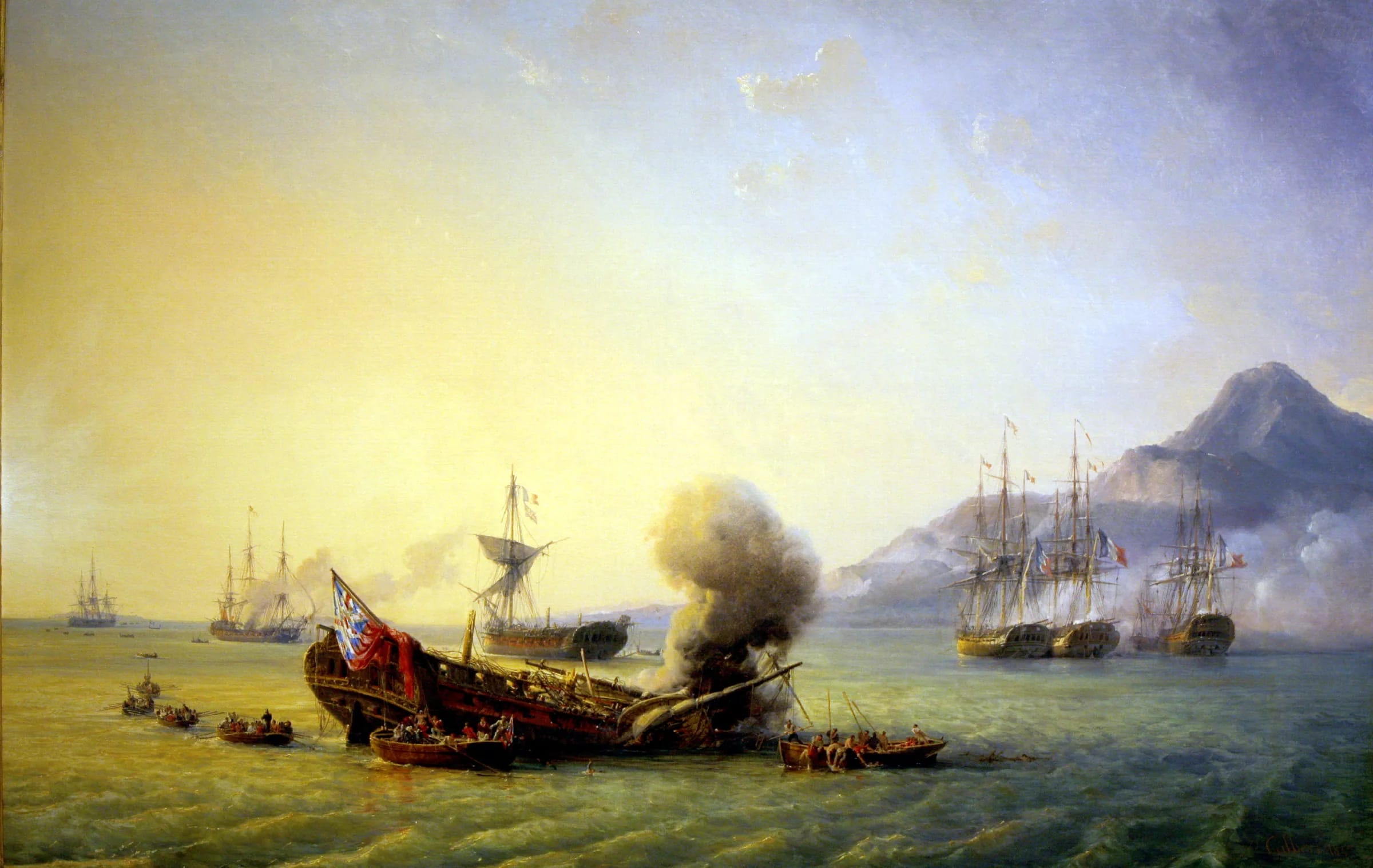
The ground floor is given over to the Battle of Grand Port. There is wreckage raised from the lagoon, cannons and cannonballs, swords and paintings of the action, together with items salvaged from the frigate Magicienne, one of the two British ships that ran aground on the reef on 22 and 23 August 1810 and were lost.
Two other wrecks are represented. The museum holds the bell of the St Géran, salvaged from that ship’s wreck, and memorabilia of the Trevessa. Some visitor guides also list a dodo skeleton among the exhibits. The council’s own description of the museum does not mention one, so we leave that unconfirmed until the museum reopens and the displays can be checked.
- Wreckage, cannons and cannonballs recovered from the Battle of Grand Port.
- Paintings of the action and swords of the period.
- Items salvaged from the frigate Magicienne.
- The bell of the St Géran.
- Memorabilia of the Trevessa.
The battle the museum remembers
The fight took place between 20 and 27 August 1810 in the lagoon directly in front of the house. Four British frigates, Sirius, Iphigenia, Néréide and Magicienne, forced the reef passage to attack the French squadron under Duperré, which included Bellone, Minerve, Victor and two captured East Indiamen, Ceylon and Windham. The winding channel through the coral was known only to local pilots, the French had shifted the buoys, and Sirius and Magicienne ran aground. By the end all four British frigates were lost or captured.
Casualty figures vary within the sources, roughly 105 British killed and between 163 and 168 wounded, against 36 or 37 French killed and 112 wounded. It was the most significant Royal Navy defeat of the Napoleonic Wars, and Grand Port is the only clearly naval name among the 158 battles inscribed on the Arc de Triomphe in Paris. The British took the island anyway in December 1810. The battle guide on this site tells the week in full.
Normal opening hours and admission
When open, the museum keeps the Mauritius Museums Council’s standard hours and admission is free. The address is Royal Road, Mahébourg, and the telephone number is (230) 631 9329. These are the published hours before the closure. Confirm them when the museum reopens, since a renovation sometimes brings new arrangements with it.
| Day | Hours |
|---|---|
| Monday, Tuesday, Thursday, Friday, Saturday | 09:00 to 16:00 |
| Wednesday | 11:00 to 16:00 |
| Sunday and public holidays | 09:00 to 12:00 |
What to do instead while it is closed
The Frederik Hendrik Museum at Vieux Grand Port covers the other half of the bay’s history, the Dutch landing of 1598 and the fort of 1638, with the excavated ruins laid out in its grounds. It is run by the same council, admission is free, and it sits a few hundred metres from the Lion Mountain trailhead. It opens Monday, Tuesday, Thursday, Friday and Saturday from 09:00 to 16:00, Wednesday from 11:00 to 16:00 and Sunday from 09:00 to 12:00, and is closed on public holidays. The telephone number is (230) 634 4319.
In Mahébourg itself, walk to Pointe des Régates, where the Grand Port battle memorial of 1899 stands on the waterfront looking across the lagoon to the reef passage and to Lion Mountain. For divers with the right qualification, the wreck of HMS Sirius lies broken on sand inside the lagoon, with cannons, anchor chain and timbers visible, as an advanced dive. And from the lion’s head itself the whole battlefield is laid out below you, which is a better way to understand a week of manoeuvring inside a reef than any display case.
Île de la Passe, the islet at the reef entrance whose battery the British seized on 13 August 1810, is a protected ancient monument where French, British and Second World War structures, graffiti and war graves survive. It is seen from the shore and from boats on the lagoon rather than visited on a schedule, but it is the other fixed point of the battle, and the museum’s wreckage came from the water between it and the town.
Questions people ask
Is the Mahébourg Naval Museum open?
No. The Mauritius Museums Council states that the National History Museum has been temporarily closed for renovation works since 15 December 2025, and as of late October 2026 no reopening date has been announced. Check the council’s page for the museum or telephone (230) 631 9329 before you go. The Frederik Hendrik Museum at Vieux Grand Port remains open and free.
How much does the Naval Museum cost?
Nothing. Admission to the National History Museum is free, as it is at the other museums run by the Mauritius Museums Council. That applies when the museum is open; it has been closed for renovation since 15 December 2025, and it is possible that arrangements change when it reopens, so confirm on the council’s page at the time.
Where is the Naval Museum in Mahébourg?
On Royal Road at the southern edge of the town, in the Château Gheude on the bank of the La Chaux river. It is a walk of a few minutes from the waterfront and the market, and the house predates the town itself, which was laid out around 1806.
Why is it called the Naval Museum when its official name is the National History Museum?
Because the heart of the collection is the Battle of Grand Port of August 1810, with wreckage, cannons, swords and paintings from the fight, together with the bell of the St Géran and memorabilia of the Trevessa. The official name is National History Museum of Mauritius and it has been a museum since 15 September 1950, but locally and in most guides it is the Naval Museum.
Who were the two commanders treated in the house?
By tradition, Guy-Victor Duperré, who commanded the French squadron and was wounded in the cheek on 22 August 1810, and Nesbit Willoughby, who commanded the British frigate Néréide and was badly wounded by a splinter to the face. Both wounds are documented. The claim that they were nursed in this particular house is flagged as needing a citation, so treat it as tradition.
Is there another museum near Lion Mountain?
Yes. The Frederik Hendrik Museum at Vieux Grand Port stands on the site of the Dutch fort of 1638, a few hundred metres from the trailhead, with the excavated ruins in its grounds. Admission is free. It opens Monday, Tuesday, Thursday, Friday and Saturday 09:00 to 16:00, Wednesday 11:00 to 16:00 and Sunday 09:00 to 12:00, closed on public holidays.
Read the week of the battle
The battle guide follows the seven days of August 1810 inside the reef, from the seizure of Île de la Passe to the loss of the last frigate.