
Lion Mountain with children
Lion Mountain can be a good family morning if you treat it as two different mountains. The cane road and the lower forest are a real walk with a real view at the end, and children who are used to hills enjoy them. The ridge scrambles and the exposed lion’s head are not a place for most children, and the honest plan for a family is to turn around before them. This page says where, when and why, and lists the gentler alternatives within a short drive.
Read the guide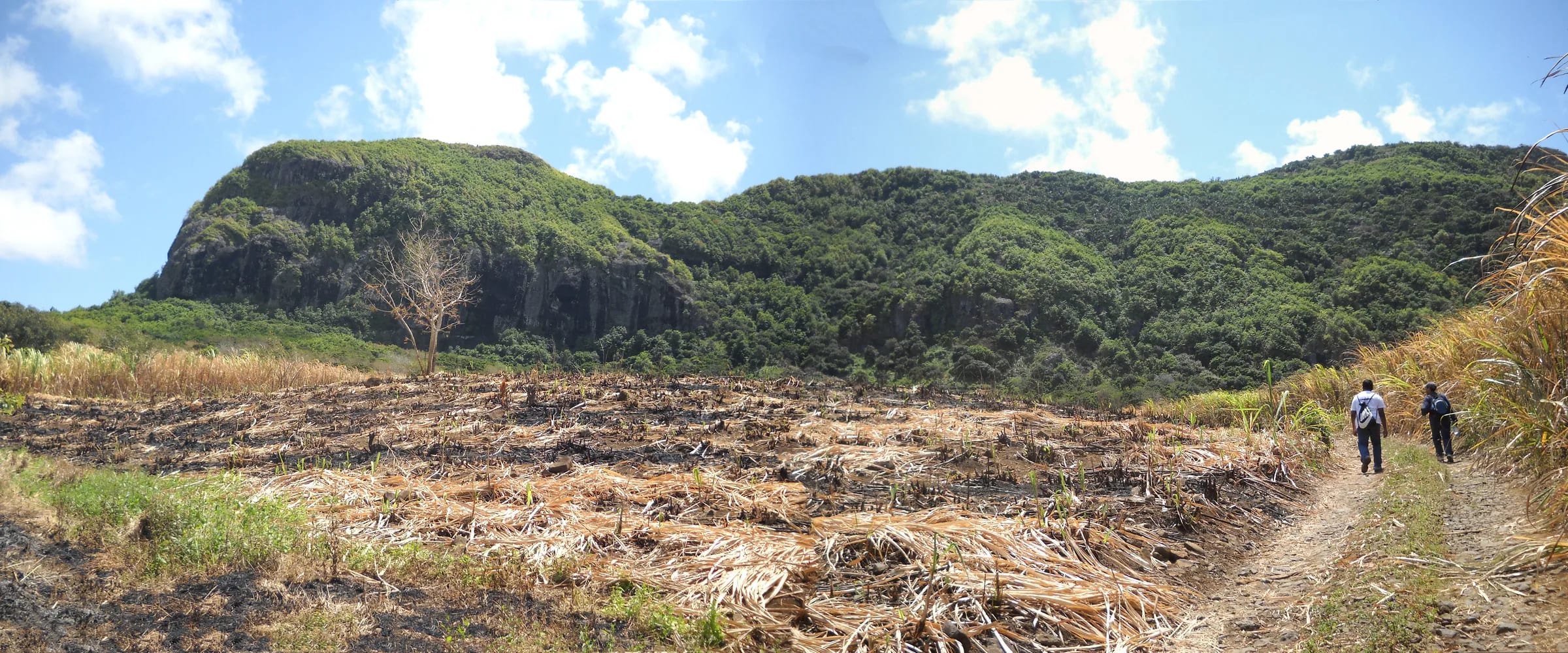
Be honest about what this mountain is
The mapped route from Vieux Grand Port climbs about 400 m in 1.8 km. That is steep by any standard, and the steepness is not spread evenly. The cane road is almost flat, the forest gully is a staircase of roots and rock, and the ridge has sections where adults use both hands. Reviewers estimate that all four limbs are needed for roughly half of the ascent and descent, and the final steps onto the head have a real drop on the seaward side. Community ratings put the route at about T3 and ask for sure-footedness and a head for heights.
None of that rules out a family visit. It rules out the top. Most adults take three to four hours for the full return trip, and a family that goes as far as the ridge viewpoint and back, with the stops that children need, will use most of that time and have a proper outing. The mistake is to set the lion’s head as the goal and then push a tired or frightened child towards it.
The parts that work for families
The walk begins behind the police station in the village and follows the main cane road inland towards the middle of the mountain. It is wide, level and open, with the lion growing larger ahead of you and the lagoon behind. Younger children can walk it freely, and it is the one section where there is room to stop without blocking anyone. Where the road bends right the footpath continues straight to a large boulder, which makes a natural first target and a fine place for a snack.
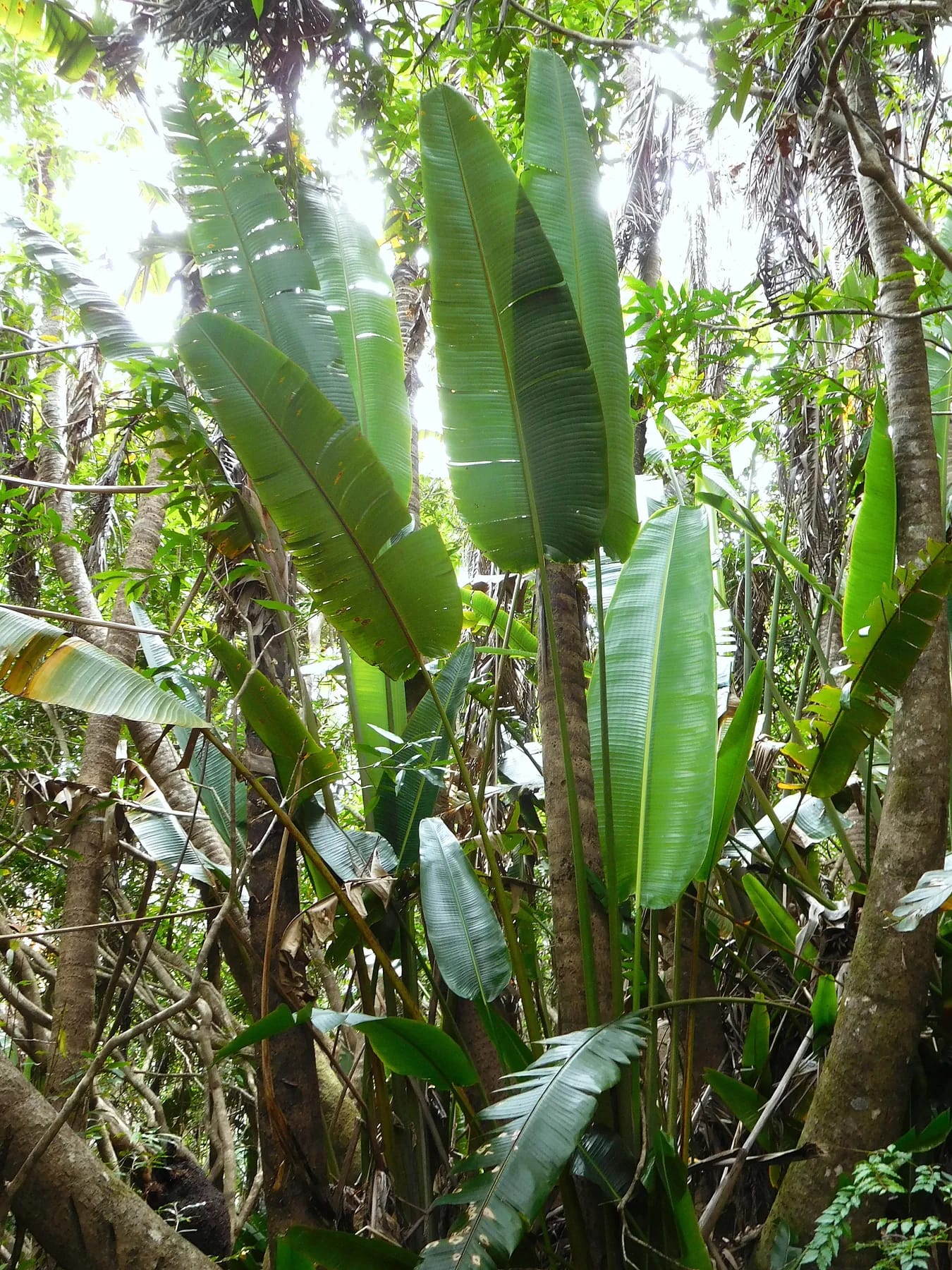
Above the boulder the path enters the forest and climbs the root gully to the ridge. This is a real climb, steep and shaded, with roots for handholds and a sense of progress that children like. It is slippery after rain and the leaves slide when dry, so it suits children who are steady on their feet and adults who are happy to go behind them. Where the path reaches the crest the view opens over the cane and the bay, and this first viewpoint on the ridge is the sensible summit for most families.
Where to turn around
Decide before you start, agree it with the children, and make the turnaround the achievement rather than the consolation. Three natural stopping points suit three different ages.
The boulder at the top of the cane
For the youngest walkers, the end of the cane road and the big boulder where the forest begins is a complete outing. You have walked towards a mountain and touched it.
The first viewpoint on the ridge
For school-age children who are steady on roots and rock, the point where the gully reaches the crest gives the view over Grand Port bay that most people come for, with none of the exposure of the head.
The viewpoint before the head
For teenagers used to hiking, the ridge can be followed to the last viewpoint before the summit block. Local guides note that anyone uneasy with drops can stop here and still have most of the view. Do not take children onto the head itself.
Realistic timings with children
Start early. Guided outings leave the village at 07:00 for a reason, and a family should aim for the same or earlier because children feel the heat sooner and the upper half of the climb has no shade. Sunrise is between about 05:22 and 06:45 depending on the month, so an early start in summer is a genuinely early alarm. Budget the whole morning. Adults manage the full climb and return in three to four hours, and a family going to the ridge viewpoint and back should allow the same, because children climb slower on steep ground, stop more often and need the stops.
Set a latest turnaround time as well as a turnaround place, and keep to it even if the viewpoint is close. Dusk is short near the equator, around twenty minutes, and in June and July the sun sets before 17:50. The best family plan on this coast is the mountain at first light and the water at Blue Bay in the afternoon, which also gives everyone something to look forward to on the way down.
Hazards to watch
The lower sections are not dangerous if you treat them with respect, but the hazards are specific and worth naming before you set off.
- Drops. The ridge beyond the first viewpoint has exposed sections and the head has a long fall on the seaward side. Keep children on the inland side and within arm’s reach wherever the path narrows.
- Heat. The climb is waterless and the rock holds the sun. Plaisance, the airport station nearby, records average daytime highs of about 30 °C from December to March. Carry at least 1.5 litres of water per person and more for children in summer.
- Slippery leaves and clay. Dry leaves slide underfoot on the forest descent and the thin clay soil stays greasy long after rain. Shoes with real grip matter more for children than for adults, because children run.
- Loose rock. In the root gully a stone dislodged by one walker falls onto the next. Keep the group close and the children above or beside you, not below.
- Mosquitoes. Reviewers mention them repeatedly in the forest and around the cane. Apply repellent in the village.
- Boredom and tiredness. A child who has stopped enjoying the climb is a child who has stopped paying attention to their feet. That is the moment to turn around.
What guided products say about age and fitness
Published guided climbs of Lion Mountain state that they are not suitable for people with heart problems, low fitness or mobility impairment, and most listings do not publish a minimum age at all. That silence is worth reading. The climb is sold to adults who hike, and a family wanting a guide should ask directly what the guide is comfortable with, how many children they will take, and whether they will plan a turnaround at the ridge rather than the head.
For a sense of how organisers in this valley grade age against effort, the CIEL Ferney Trail race on the neighbouring estate sets a minimum age of 6 for its 5 km fun run, 12 for the 10 km, 16 for the 18 km and 18 for the 35 km. Those are racing limits, not hiking rules, but they show how seriously the people who know this ground take the step from a short valley trail to a long day over the mountains.
Gentler alternatives nearby
If the honest answer is that your children are too young for the ridge, the south-east has three outings within a short drive that give a family a proper day without any exposure.
Ferney is the closest thing to Lion Mountain for a family, because it is the same mountain seen from the forested northern side. The 5 km trail is a walk, not a climb, and the kestrel feeding gives children a reason to be there at a set time. Blue Bay is the swim after the hike for families who did go up, and Île aux Aigrettes is the outing for a day when the cloud sits on the ridge.
| Place | What it offers | Practical notes |
|---|---|---|
| Vallée de Ferney | Marked forest trails from 5 km with about 75 m of climb, graded easy, plus longer routes, a kestrel feeding at noon and a restaurant | Open seven days, activities 08:30 to 14:00, reception to 17:00. Visitors pay Rs 500 per adult and Rs 250 per child, residents Rs 250 and Rs 100. The car park has reportedly been locked after 16:00. No pets. |
| Blue Bay Marine Park | A 353 ha marine park south of Mahébourg with a public beach, a shallow lagoon, glass-bottom boat trips and snorkelling over coral | National park since 1997, marine park since 2000 and a Ramsar site since 2008. The beach is popular with local families, especially at weekends. |
| Île aux Aigrettes | A restored coral islet in the lagoon with giant tortoises, pink pigeons and a guided trail of 1.5 to 2 hours after a short boat ride | Run by the Mauritian Wildlife Foundation from Pointe Jérôme near Mahébourg. Book ahead through the foundation. |
Questions people ask
Can children climb Lion Mountain?
Children who are used to hills can enjoy the cane road, the forest climb and the first viewpoint on the ridge, which together make a real outing that fills a morning. The exposed ridge sections and the lion’s head are not suitable for most children because of the drops and the hands-on rock. Plan to turn around at the ridge and make that the achievement.
What age is Lion Mountain suitable for?
No source sets a minimum age, and guided listings exclude low fitness and reduced mobility rather than naming one. As a guide, the cane road suits any child who can walk a few kilometres, the forest gully suits steady school-age children, and the ridge beyond the first viewpoint is for teenagers with hiking experience. The head itself is not for children. Judge your own child on steep, rooty ground before you decide.
How long does Lion Mountain take with kids?
Allow the whole morning. Adults take three to four hours for the full return trip, and a family going only as far as the first ridge viewpoint should budget about the same, because children climb slowly on steep ground and need frequent stops. Start at or before 07:00 so the climb is done before the heat, and fix a latest turnaround time before you leave the village.
Is there shade on Lion Mountain for children?
In the lower forest, yes. The gully from the boulder to the ridge is shaded and relatively cool. The cane road is open but short, and the ridge above the first viewpoint has no shade at all, which is one more reason to turn around there with children. Start early, carry water and a hat, and keep the exposed sections for another year.
Is the Vallée de Ferney better for families than Lion Mountain?
For most families with younger children, yes. Ferney’s 5 km trail is graded easy with about 75 m of climb, the routes are marked, there is a reception, a restaurant and a kestrel feeding at noon, and nothing is exposed. It costs Rs 500 per adult visitor and Rs 250 per child and runs within set hours. Lion Mountain from the village is free but unmarked and steep.
Can we swim at Blue Bay after the hike?
Yes, and it is the natural end to a family morning on the mountain. Blue Bay is a public beach inside a 353 ha marine park south of Mahébourg, with a shallow lagoon, glass-bottom boat trips and snorkelling over coral. It is popular with local families, especially at weekends, and sits close to the airport. The Blue Bay page on this site has the detail.
Looking for the easier walk?
The Vallée de Ferney page covers the marked trails, the kestrel feeding and the practicalities on the forested side of the mountain.